Hove Shockwave Blog




Shockwave Therapy for Knee Osteoarthritis (Knee Arthritis)
Written by Dr Lewis Kingsnorth (DC, MChiro), GCC-registered chiropractor (Reg. No. 3359). Last reviewed: September 2026.
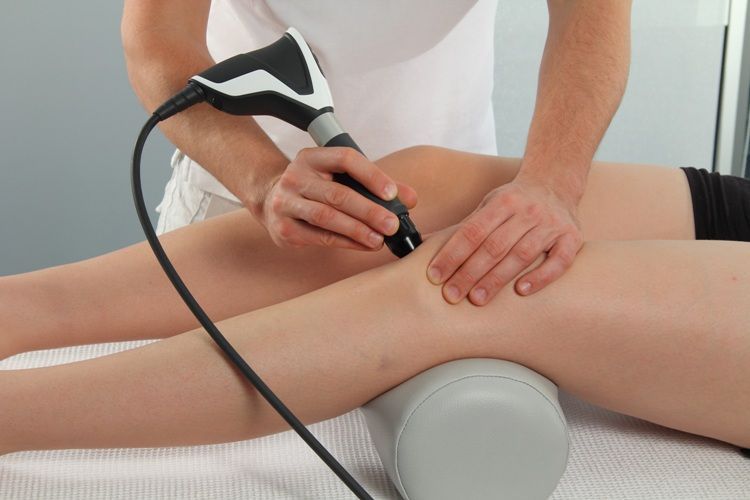
If knee pain is making the stairs, the garden, or a walk along Hove seafront harder than it used to be, you are far from alone — osteoarthritis of the knee is one of the most common reasons people seek help with a painful joint. Many people understandably want to explore every non-surgical option before considering an operation, and shockwave therapy is one approach we're increasingly asked about. This page explains what knee osteoarthritis is, what the research does and doesn't say about shockwave therapy, and how we approach it at our Hove clinic.
Hove Shockwave
What is knee osteoarthritis?
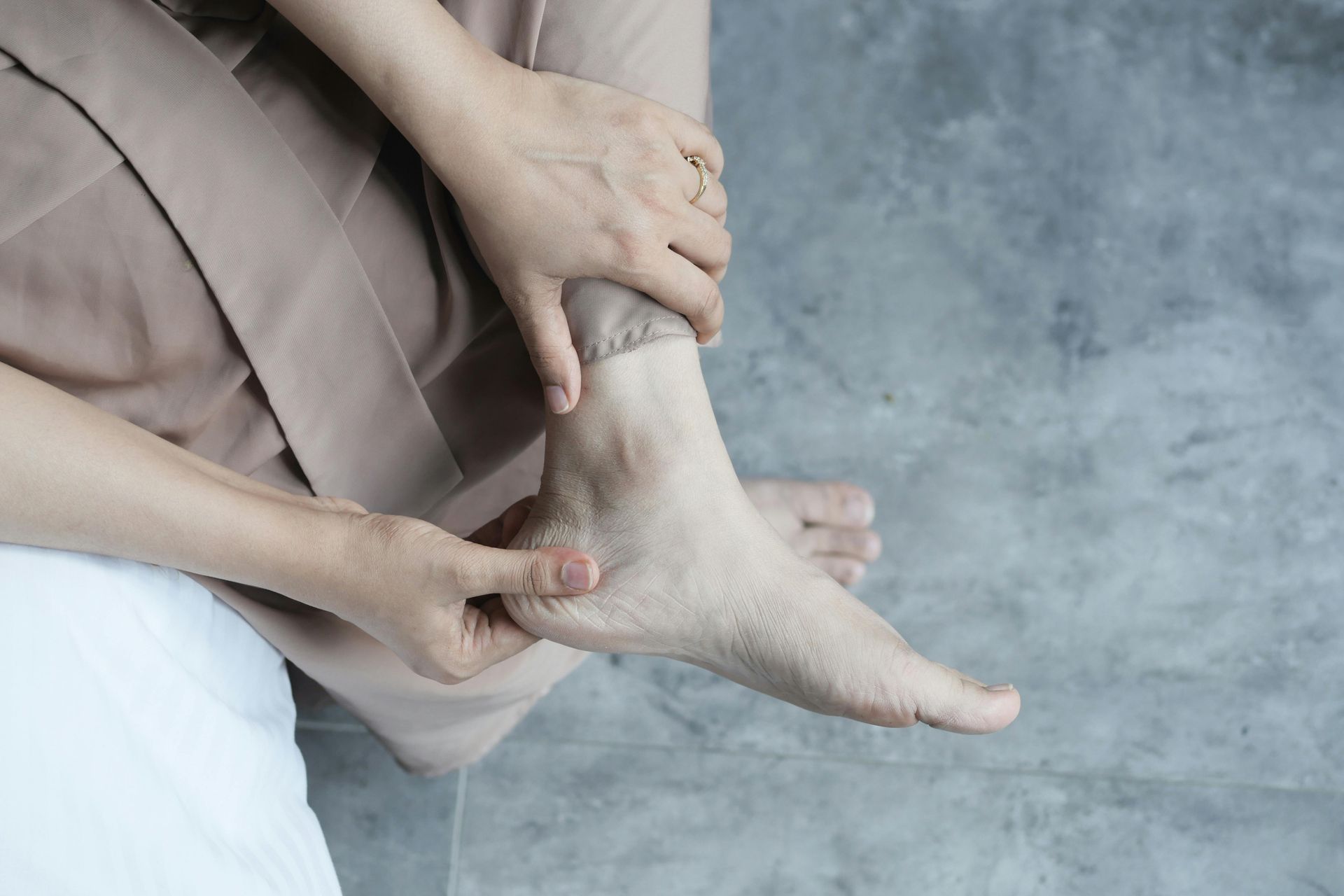
Osteoarthritis is the most common form of arthritis. In a healthy knee, smooth cartilage lets the joint glide freely. In osteoarthritis, that cartilage gradually thins and the joint — including the bone beneath it — changes over time. This can bring pain, stiffness, swelling, and a sense that the knee simply doesn't move as easily as it once did. It usually develops slowly and becomes more common from around the age of 45, though it can affect younger people too, particularly after a previous knee injury.
It's worth knowing that osteoarthritis is different from inflammatory types of arthritis, such as rheumatoid arthritis, which are driven by the immune system and managed differently. If several joints are affected, if morning stiffness lasts a long time, or if you feel generally unwell, that's a reason to see your GP rather than assume it's osteoarthritis.
Common signs and symptoms
• Pain that tends to be worse with activity or towards the end of the day
• Stiffness, especially first thing in the morning, that usually eases within about half an hour • A grinding or crackling sensation in the joint (crepitus)
• Some swelling around the knee
• Reduced range of movement, or a feeling that the knee is weaker or less stable
How knee osteoarthritis is diagnosed
Knee osteoarthritis can often be recognised from your history and a careful physical examination. National guidance (NICE) supports diagnosing it without scans in people aged 45 or over who have activity-related knee pain and little or no morning stiffness. Where the picture is less clear, or to help rule out other causes, we have on-site digital X-ray available. Any X-ray is only ever carried out where it is clinically justified for you as an individual, in line with UK radiation regulations (IRMER 2017) — it is not a routine step. If we suspect an inflammatory or other type of arthritis, we'll refer you to your GP.
First things first: the foundations of managing knee osteoarthritis
Whatever else you go on to consider, the foundations of managing knee osteoarthritis are the same, and they are well worth getting right. National guidance places the greatest emphasis on staying active, a tailored strengthening programme — the muscles around the knee, particularly the thigh, matter a great deal — and, where it's relevant, managing body weight to reduce the load going through the joint. Shockwave therapy is best thought of as something that may support this wider plan, not a replacement for it.
How shockwave therapy may help knee osteoarthritis
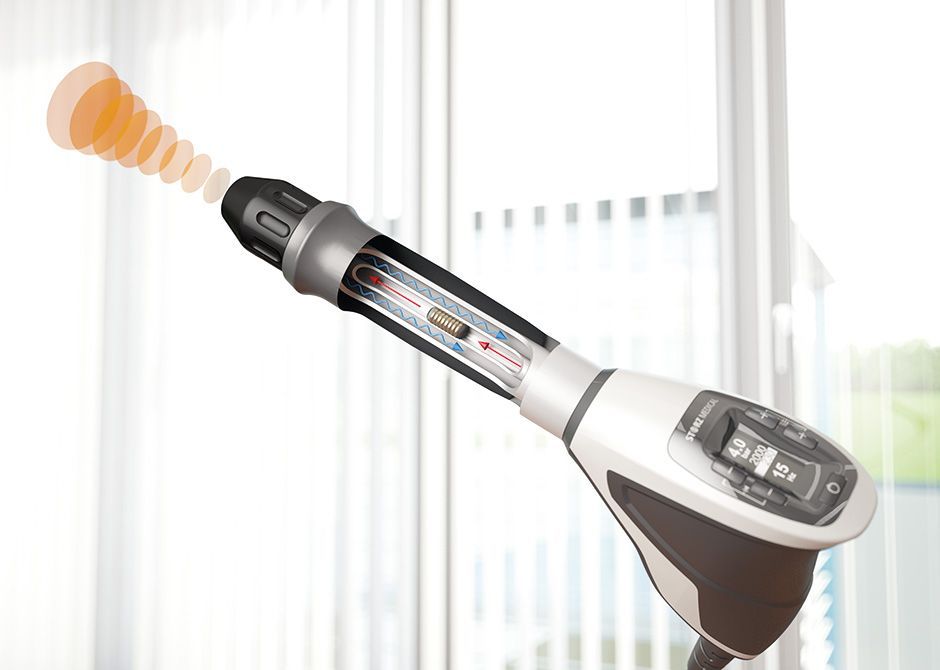
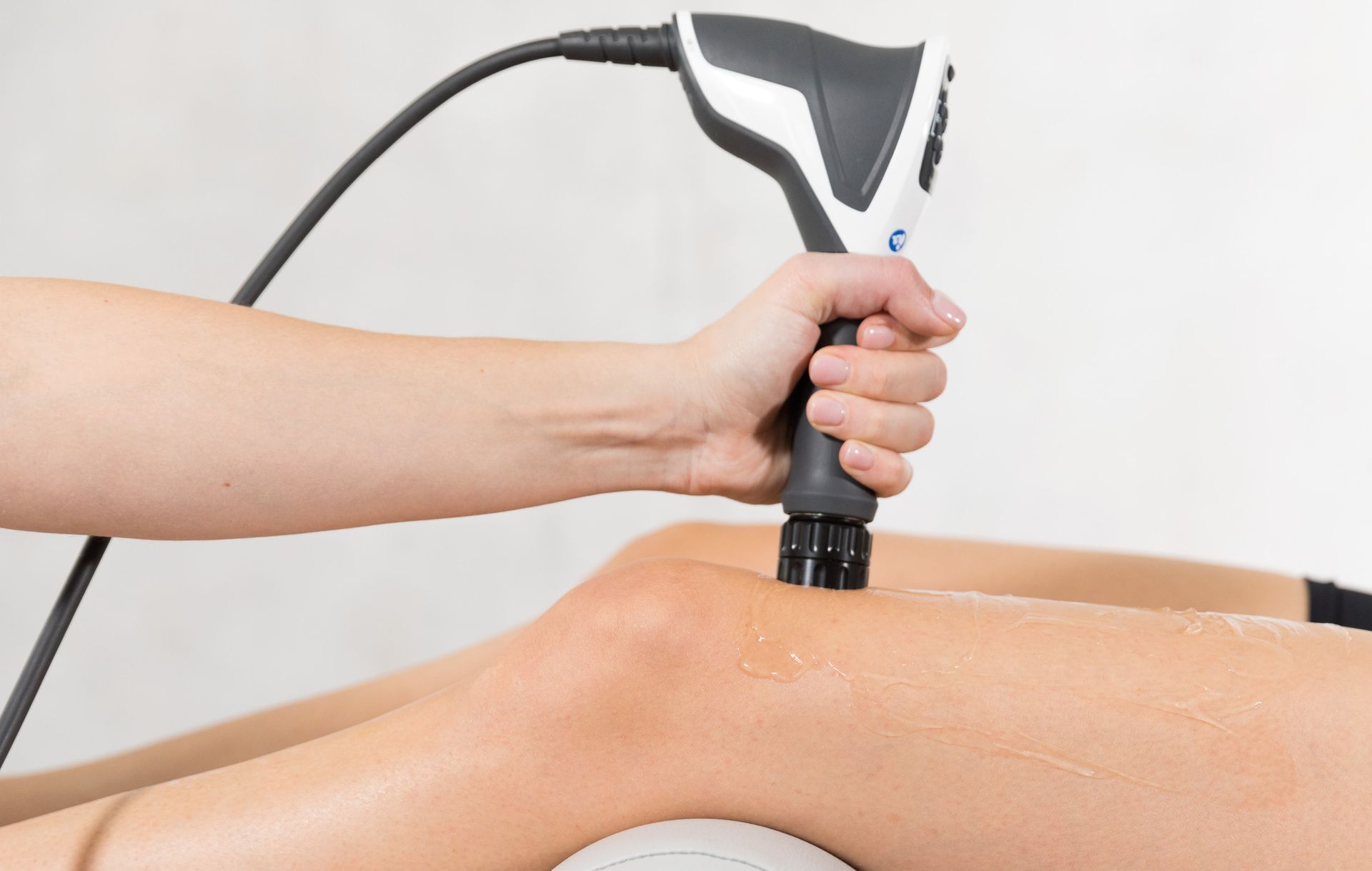
Shockwave therapy (extracorporeal shockwave therapy, or ESWT) is a non-invasive treatment that delivers focused acoustic pressure waves to the affected area through the skin, using a handheld device. It involves no needles and no surgery. The waves are thought to stimulate local blood flow and the body's natural repair responses, and to influence how pain is signalled — although exactly how it works in osteoarthritis is not yet fully understood.
Hove Shockwave
So what does the research actually say? A growing body of clinical studies, including several systematic reviews and meta-analyses, suggests that shockwave therapy may help reduce knee pain and improve function in the short to medium term for some people with knee osteoarthritis, with only minor, temporary side effects reported. The quality of this evidence is currently rated as moderate, and it's important to be realistic about what that means: shockwave therapy is not a cure, and it cannot reverse the changes that have already happened in the joint or regrow cartilage. What it may do, for the right person, is help make everyday movement more comfortable — so you can keep up the activity and strengthening that help the most.
What about EMTT?
Alongside shockwave, our clinic also offers EMTT (extracorporeal magnetotransduction therapy) using the STORZ MEDICAL Magnetolith — a technology available at only a small number of UK clinics. Like shockwave, it is non-invasive, and it is sometimes considered for larger, load-bearing joints. As with any treatment here, it's best thought of as one part of an individually assessed plan, and we'll talk you through honestly whether it's appropriate for you.
What to expect at the clinic
Your first visit is a thorough assessment. We take a history, examine the knee, and make sure the diagnosis is right before recommending anything at all. If shockwave is appropriate, treatment is usually delivered as a short course of sessions spaced roughly a week apart — often around three to six in total, though we'll tailor this to you. Each session takes only a few minutes of actual treatment time.
Most people feel a firm tapping sensation and some discomfort while the device is working, and the intensity can be adjusted for comfort. Mild soreness, warmth or redness over the area for a day or two afterwards is normal and settles on its own. We'll pair the treatment with a simple strengthening and activity plan, because the two together tend to give the best results.
Hove Shockwave
When knee pain needs prompt medical attention
Shockwave therapy isn't suitable for every kind of knee problem, and some symptoms need checking before any treatment is considered. Please contact your GP, NHS 111, or urgent care if you have:
- A knee that is hot, very swollen and painful, especially alongside a fever or feeling unwell — this can indicate infection and needs urgent assessment
- Sudden inability to put weight on the leg, an obvious deformity, or severe pain after a fall or injury — a possible fracture
- A knee that truly locks or gives way, or that suddenly cannot straighten
- Calf pain, swelling, warmth or redness — which can occasionally signal a blood clot
- Pain in several joints, prolonged morning stiffness, or feeling generally unwell — which may point to an inflammatory condition
If you are pregnant, have a bleeding or clotting disorder, or have certain implants or health conditions, please tell us — shockwave is not suitable in some situations, and we will always check carefully before proceeding.
Why patients across Hove and Brighton choose us
- Breadth of technology — we offer both focused and radial shockwave, plus EMTT, so treatment can be matched to you rather than to a single one-size-fits-all machine
- On-site digital X-ray, used responsibly and only where clinically justified
- Care led by a GCC-registered chiropractor
- Recognised by Vitality and AXA
- A short walk from Hove station, on Goldstone Villas
- Frequently asked questions
- Can shockwave therapy cure knee osteoarthritis?
- No. Shockwave therapy is not a cure, and it cannot reverse osteoarthritis or regrow cartilage. For some people it may help reduce pain and improve how the knee functions, which can make staying active easier — but it works best as part of a wider plan that includes exercise and, where relevant, weight management.
- Does shockwave therapy work for "bone-on-bone" or severe knee arthritis?
- Most research on shockwave therapy has looked at mild to moderate knee osteoarthritis, and results vary from person to person. In more advanced ("bone-on-bone") arthritis the likely benefit is less certain, and other options may be more appropriate. The honest answer is that we can only tell you whether it's a reasonable thing to try after assessing your knee individually.
- How many shockwave sessions will I need for knee arthritis?
Hove Shockwave
It varies, but a course is often around three to six sessions, spaced about a week apart. We'll give you a clearer idea after your assessment, and we review how you're responding as we go rather than committing you to a fixed number in advance.
Does shockwave therapy on the knee hurt?
Most people find it uncomfortable rather than painful. You'll feel a strong tapping sensation while the device is working, and the intensity can be adjusted. Some mild soreness, warmth or redness over the area for a day or two afterwards is common and settles by itself.
Is shockwave therapy for knee arthritis available on the NHS or approved by NICE?
Shockwave therapy for knee osteoarthritis is generally offered privately rather than on the NHS. To be clear, there is no specific NICE recommendation for shockwave therapy in knee osteoarthritis — national guidance focuses on exercise, activity and weight management as the core treatments. We offer shockwave as an additional, evidence-informed option to consider alongside those foundations, and we'll always be straightforward about what it can and cannot do.
Can shockwave therapy help me avoid a knee replacement?
Shockwave therapy is not a substitute for surgery where surgery is genuinely needed. For some people with milder arthritis, easing symptoms non-invasively may help them stay comfortable and active — but we can't promise it will prevent or delay a knee replacement, and decisions about surgery should always be made with your GP or a knee specialist.
This article is for general information and education only. It is not medical advice and is not a substitute for an individual assessment by a qualified healthcare professional. Shockwave therapy is not suitable for everyone, and outcomes vary between individuals. Always seek the advice of your GP or a suitably qualified clinician about your particular circumstances.
Book a knee assessment in Hove
The first step is simply finding out whether shockwave therapy is a sensible option for your knee. Book an assessment and we'll examine the joint, talk through the evidence honestly, and only recommend treatment if we believe it may genuinely help.
📍 82 Goldstone Villas, Hove, BN3 3RU | 📞 01273 324466 | Book online at chiropracticfirst.janeapp.co.uk
