Hove Shockwave Blog


High Hamstring Tendinopathy: Sit-Bone Pain When You Sit or Run, and How Shockwave Therapy May Help

If you have a deep ache right where you sit, on the bony point at the bottom of your buttock, that grumbles through long drives, flares on hill reps or speed sessions, and has you shifting about on hard chairs, you may be dealing with high hamstring tendinopathy.
It is common in runners, but it also turns up in people who have never run a step: anyone who sits for long periods, does a lot of deep forward bending, or has suddenly stepped up their training. It is also easily mistaken for other causes of buttock pain, such as sciatica, a “tight piriformis” or a simple hamstring strain, and people often spend months stretching it, which can make it worse.
This guide explains what is going on, how to tell it apart from the look-alikes, the warning signs to act on, and where shockwave therapy fits alongside the exercise programme that remains the backbone of treatment.
By Dr Lewis Kingsnorth DC MChiro (GCC Reg. 3359) · Hove Shockwave, 82 Goldstone Villas, Hove Published October 2026 · 8 minute read
At a glance
• High (proximal) hamstring tendinopathy is overload and irritation of the hamstring tendon where it attaches to your sit bone (the ischial tuberosity).
• Classic signs: deep, local sit-bone pain that is worse with sitting, running (especially uphill or fast), lunging and bending forward with straight legs.
• A sudden “pop” with bruising and difficulty walking is different. That can be a tendon tear and needs prompt assessment.
• Progressive strengthening is the foundation of treatment. Shockwave therapy may help as part of that plan, particularly for stubborn cases. The research is encouraging but still limited.
What is high hamstring tendinopathy?
Your three hamstring muscles run down the back of the thigh. At the top, they join into a thick tendon that anchors onto the ischial tuberosity, the bony “sit bone” you can feel when you sit on a hard seat.
Tendinopathy means the tendon has become painful and less able to cope with load. It is not usually a tear, and it is not really “inflammation” in the way the older term tendinitis suggests. The tendon has simply been asked to do more than it was ready for, usually through a combination of:
- Tension: running, particularly hills, speed work and long strides.
- Compression: when your hip is deeply bent, the tendon is squashed against the sit bone. That is why sitting,
- deep forward folds and lunges can be so provoking.
- A sudden change: a new training block, more hills or mileage, a new sport, or long spells of sitting after being active.
- Because tendons adapt slowly, the problem tends to build gradually and can linger for months if the load is not managed.
- Symptoms: what does it feel like?
- a deep ache at the sit bone, usually on one side, that you can often point to with one finger
- pain when sitting, especially on hard seats, in the car or after a while; many people end up perching on one buttock
Hove Shockwave · Editor handoff · High hamstring tendinopathy Page 3 of 10
- pain when running, particularly uphill, when accelerating or with a long stride; it may ease once warmed up and then be worse afterwards or the next morning
- pain with lunges, deadlifts, deep squats or bending forward with your legs straight
- pain with hamstring stretches, which may feel as if they help briefly but often make things worse
- stiffness at the top of the hamstring first thing in the morning or after sitting
- Is it hamstring tendinopathy, sciatica or a strain?
- These three are commonly confused. The table below shows the typical patterns, though real life is often less tidy.
Where you feel it How it started
What it feels like
Coughing or sneezing
Gradually, over weeks
Deep ache; worse sitting, running and lunging
Usually no effect
Buttock and down the back of the leg, often below the knee
Suddenly or gradually, often with back pain
Sharp, burning or shooting; may bring pins and needles, numbness or weakness
Can make it worse
Hamstring strain
Back of the thigh, usually mid-way down
Suddenly, mid-sprint or mid-stretch
Sharp pain, sometimes with bruising
Usually no effect
High hamstring tendinopathy
Deep, at the sit bone; stays fairly local
Sciatica (nerve pain from the back)
Other causes of pain in this area include deep gluteal syndrome (sometimes called piriformis syndrome), irritation of the sciatic nerve where it runs close to the hamstring tendon, a narrowed space between the hip and pelvis (ischiofemoral impingement), sacroiliac joint pain and, in runners, bone stress injuries. More than one can be present at once, which is why a careful assessment matters.
Warning signs: when to get help quickly
Call 999 or go to A&E if you have buttock or leg pain with:
• numbness around or under your genitals, or around your bottom
• new difficulty peeing, being unable to pee or control your bladder, or not noticing when you need to poo or being unable to control it
• pain, numbness or weakness in both legs, or weakness that is severe or getting worse
These can be signs of cauda equina syndrome, a medical emergency. Don’t drive yourself to hospital.
Get seen promptly (contact NHS 111 or your GP the same day) if you felt a sudden “pop” or tearing at the top of the back of your thigh, especially during a slip, a fall or a sudden forceful stretch, followed by pain when sitting, difficulty walking or bruising down the back of the thigh. This can mean the tendon has pulled away from the bone (a proximal hamstring avulsion). It may need a surgeon’s opinion, and outcomes tend to be better when it is recognised early. Also seek help promptly if the pain is severe or getting worse, swelling or bruising is large or spreading, or you have a high temperature or feel hot and shivery.
See your GP if you have pain at night that does not ease with rest or changing position, unexplained weight loss, feel generally unwell, or have a history of cancer.
How we assess sit-bone pain at Hove Shockwave
- A detailed history. How and when it started, your training and sitting habits, what provokes it, previous injuries and any back or leg symptoms.
- A hands-on examination. Checking for tenderness at the sit bone, using specific tests that load the hamstring tendon at the hip in different positions, and assessing hip movement and strength.
- A back and nerve screen to check whether your lower back or the sciatic nerve could be contributing.
Hove Shockwave · Editor handoff · High hamstring tendinopathy Page 4 of 10
4. Imaging only when it adds something. The diagnosis is usually made clinically. If the picture is unclear, a tear is suspected or progress is slower than expected, an MRI scan can help, and we will refer you if needed. X-rays do not show tendons, so they are rarely useful here.
5. A clear plan, or a referral if the signs point to a different cause. Treatment: strengthening first, shockwave alongside
1. Settle the irritation
- Reduce or pause the most provoking activities for now: hills, speed work, long strides, deep lunges and heavy deadlifts.
- Stop stretching your hamstrings for the time being. Stretching compresses the tendon against the sit bone.
- Sit on a softer cushion, take regular breaks from sitting and avoid crossing your legs.
- Stay active with things that don’t flare it. For many people that means flat walking or swimming.
- 2. Rebuild the tendon
- The best-supported treatment for high hamstring tendinopathy is a progressive strengthening programme. It typically starts with gentle holds (isometric exercises) that do not provoke pain, moves on to slower, heavier strengthening while gradually increasing how far the hip is bent, and finishes with faster, running-specific work. It usually needs to be kept up for at least eight weeks, and often longer.
- 3. Where shockwave therapy fits
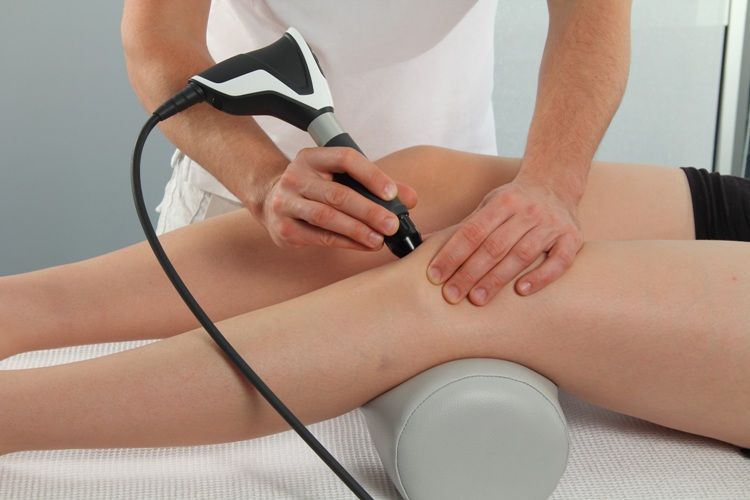
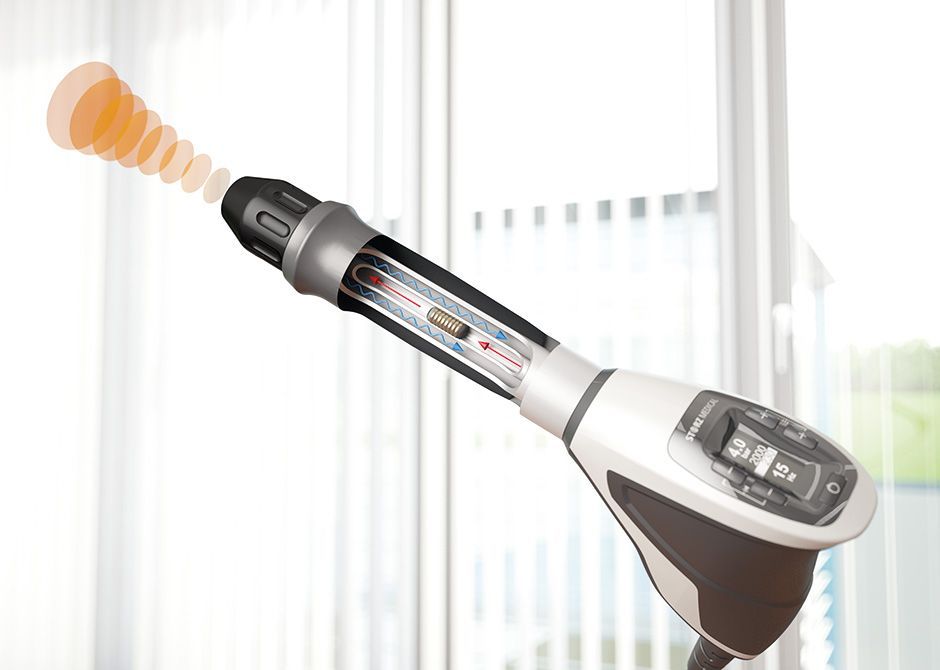
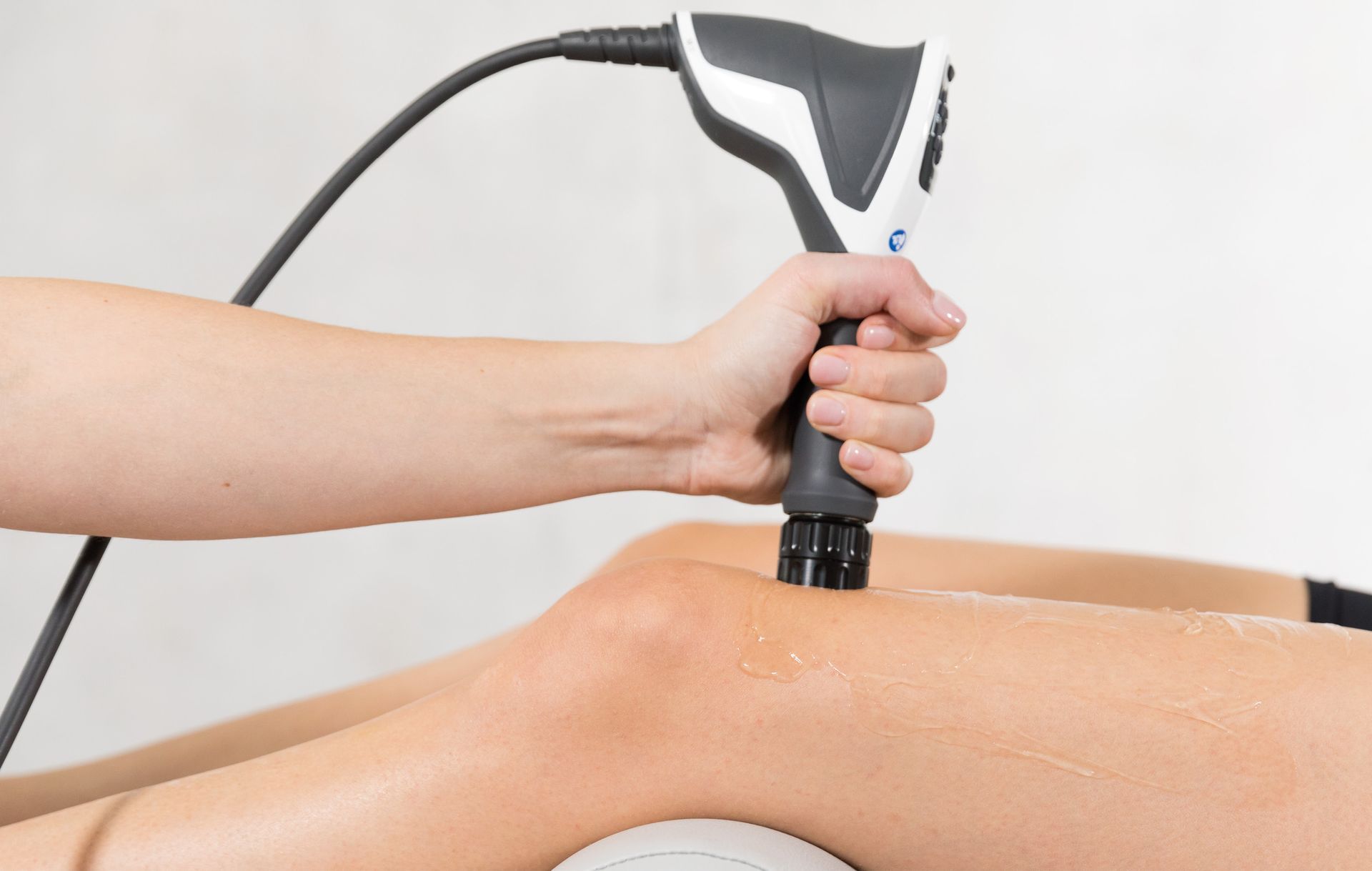
- Shockwave therapy delivers pulses of acoustic energy into the tendon. It is thought to help restart the healing response in tendons that have stalled and to reduce pain sensitivity, although the exact mechanisms are still being studied.
- For high hamstring tendinopathy specifically, the evidence is encouraging but limited:
- A randomised controlled trial in professional athletes with long-standing proximal hamstring tendinopathy found that those treated with shockwave reported less pain and better function three months later than those given conventional care. Results in elite athletes may not apply to everyone.
- A 2025 systematic review of shockwave for tendon problems around the hip and pelvis concluded that it may be safe and effective, while calling for better-quality research.
- Reviews that grade the overall evidence rate it as weak, and recommend shockwave as part of a combined, exercise-based plan rather than on its own.
- So we use it the way the evidence suggests: alongside your strengthening programme, mainly for people whose symptoms have not settled with exercise and load management alone.
- Radial or focused shockwave?
- The upper hamstring tendon sits deep beneath the buttock muscle. We have both radial and focused shockwave in clinic. Radial shockwave delivers its energy closest to the skin, while focused shockwave can be set to concentrate its energy at a chosen depth. We choose the approach, and how you are positioned on the couch, based on your assessment.
- What to expect from a course
- Sessions are usually weekly. A course commonly runs to around four to six sessions, depending on your assessment and how you respond.
- Treatment feels like strong tapping over the sit bone. It can be uncomfortable, but the intensity is adjusted to keep it tolerable, and you may feel sore for a day or two afterwards.
- Improvement is gradual, over the weeks and months after the course. Pain when sitting is often the last symptom to settle.
- Keep up your strengthening programme throughout. That is what builds lasting capacity in the tendon.
Hove Shockwave · Editor handoff · High hamstring tendinopathy Page 5 of 10
Is shockwave suitable for me?
We check before treating. Shockwave is usually avoided if you are pregnant, have a bleeding or clotting disorder or are on treatment that affects blood clotting, have an infection or a tumour in the area, or if a recent tear is suspected. Tell us about any other health conditions at your assessment.
Running with high hamstring tendinopathy
Whether you are building up for the Brighton Marathon or running hill sessions on the South Downs, you may not need to stop completely. Flat, easy running at a comfortable stride is usually better tolerated than hills, speed work or long strides. As a rule of thumb, pain during or after a run should stay mild (no more than about 3 out of 10) and settle by the next morning. If your sit-bone pain is worse the day after a run, scale back. Hill and speed work are usually reintroduced last, once strength and sitting tolerance have improved.
Frequently asked questions
What does high hamstring tendinopathy feel like?
Usually a deep ache at the sit bone at the bottom of the buttock, often on one side. It tends to be worse when sitting, especially on hard seats or in the car, and when running uphill, accelerating, lunging or bending forward with straight legs. Many people also feel stiff at the top of the hamstring first thing in the morning or after sitting.
Why does high hamstring tendinopathy hurt when sitting?
When your hip is bent, the hamstring tendon is pressed against the sit bone. Sitting, particularly on a firm seat or for a long time, adds that compression to a tendon that is already irritated. A softer cushion, regular breaks from sitting and avoiding crossing your legs can help reduce it while the tendon recovers.
Is it sciatica or high hamstring tendinopathy?
They can feel similar, but there are clues. Hamstring tendinopathy usually stays deep and local at the sit bone and is worse with sitting and running. Sciatica more often spreads down the back of the leg, sometimes to the foot, can feel sharp or burning, and may come with pins and needles, numbness or weakness. The two can overlap, so a proper assessment is the best way to tell.
Can shockwave therapy help high hamstring tendinopathy?
It may help, particularly for long-standing cases that have not settled with exercise and load management. A randomised trial in professional athletes and a 2025 review of hip and pelvis tendon problems both reported encouraging results, but the overall evidence is still limited. We use shockwave alongside a progressive strengthening programme rather than on its own.
Can I keep running with high hamstring tendinopathy?
Often yes, with changes. Flat, easy running at a comfortable stride is usually better tolerated than hills, speed work or long strides. As a rule of thumb, pain during or after a run should stay mild and settle by the next morning. If your sit-bone pain is worse the day after running, scale back and get it assessed.
How long does high hamstring tendinopathy take to heal?
It varies, and it is rarely quick. Tendons adapt slowly, so a strengthening programme usually needs at least eight weeks and often longer. Where shockwave is used, improvement tends to be gradual over the weeks and months after the course, and pain when sitting is often the last symptom to settle.
Hove Shockwave · Editor handoff · High hamstring tendinopathy Page 6 of 10
Book a shockwave assessment in Hove
If deep sit-bone pain is affecting your sitting, running or training, and none of the warning signs above apply, an assessment will tell you whether it is likely to be high hamstring tendinopathy and whether shockwave therapy is a sensible part of your plan. Find out more about our hamstring tendinopathy shockwave treatment in Brighton.
Address Phone Opening hours Insurance
82 Goldstone Villas, Hove, BN3 3RU (close to Hove station)
01273 324466
Mon & Thu 6:45am–8pm · Tue & Fri 6:45am–7pm · Wed 8am–7pm · Closed weekends Recognised by AXA and Vitality for shockwave therapy. Check your policy before booking.
Treatments are carried out by Dr Lewis Kingsnorth DC MChiro, registered with the General Chiropractic Council (Reg. 3359).
Important: This article is general information and not a substitute for an individual assessment. Shockwave therapy is not suitable for everyone and results vary from person to person. If you have any of the warning signs above, seek medical help straight away.
References
- Cacchio A, Rompe JD, Furia JP, Susi P, Santilli V, De Paulis F. Shockwave therapy for the treatment of chronic proximal hamstring tendinopathy in professional athletes. Am J Sports Med 2011;39(1):146–153.
- Rau OR, Cheng J, Jivanelli B, Tenforde AS, Wyss J. Extracorporeal shockwave therapy for tendinopathies around the hip and pelvis: a systematic review. HSS Journal 2025.
- Dizon P, Jeanfavre M, Leff G, Norton R. Comparison of conservative interventions for proximal hamstring tendinopathy: a systematic review and recommendations for rehabilitation. Sports (Basel) 2023;11(3):53.
- Arthurs JR, Ha CT, Pohlad JL, Romero JM, Shapiro SA. Radial pressure wave and focused shockwave therapy for proximal hamstring tendinopathy: the role of patient positioning. Int J Sports Phys Ther 2026;21(4):467–476.
- van der Made AD, Tol JL, Reurink G, Peters RW, Kerkhoffs GM. Potential hamstring injury blind spot: we need to raise awareness of proximal hamstring tendon avulsion injuries. Br J Sports Med 2019;53(7):390–392.
- NHS. Sciatica. nhs.uk/conditions/sciatica
- NHS. Hamstring injury. nhs.uk/conditions/hamstring-injury
