Hove Shockwave Blog





Focused Shockwave Therapy for Haglund's Deformity Heel Pain

By Dr. Lewis Kingsnorth, DC MChiro — Chiropractor, GCC Reg. 3359 · Hove Shockwave, Hove
Clinically reviewed for accuracy and advertising-standards compliance. Educational information only — not a substitute for a personal assessment.
A Haglund's deformity — often nicknamed a "pump bump" — is a bony enlargement at the back of the heel, where the Achilles tendon anchors onto the heel bone. When it becomes painful, the bone itself is rarely the whole story. The discomfort usually comes from the soft tissues that sit around it: an irritated tendon at its insertion, and an inflamed fluid-filled sac (bursa) squeezed between the bone and the tendon. That distinction matters, because it shapes what any treatment can realistically do.
Focused shockwave therapy is one of the options people ask us about for this kind of stubborn heel pain. Below is a straight account of where it can help, where it can't, and how we approach it here in Hove.
The honest headline first
Hove Shockwave — Editor Handoff | Haglund's Deformity & Focused Shockwave | Page 1 of 7
Shockwave therapy does not remove, shrink or "break down" the bony bump of a Haglund's deformity. What it can do — for some people — is calm the painful soft tissue that develops around it, so the heel becomes more comfortable and easier to load. If the bone is the main mechanical problem, shockwave is not the fix, and we'll tell you that plainly.
What a Haglund's deformity actually is
The Haglund's deformity is a prominence on the upper-back corner of the heel bone (the posterosuperior calcaneus). On its own, a bony bump there can be completely painless — plenty of people have one and never know. It tends to become a problem when it starts to rub and impinge against the Achilles tendon and the bursa in front of it, particularly during the "bending up" motion of the ankle when you walk, climb stairs or push off.
Because of that rubbing, a painful Haglund's often travels as part of a trio, sometimes called Haglund's syndrome:
• Insertional Achilles tendinopathy — degeneration and pain where the Achilles tendon attaches to the heel. • Retrocalcaneal bursitis — inflammation of the bursa sandwiched between the bone and the tendon.
• The bony prominence itself — which drives the mechanical irritation.
Firm heel counters on shoes — the stiff cup at the back — are a classic aggravator, which is where the "pump bump" nickname comes from. Tight calf muscles, a high-arched foot and a sudden increase in running or hill work can all add to the load.
Why the soft tissue is the target — not the bone
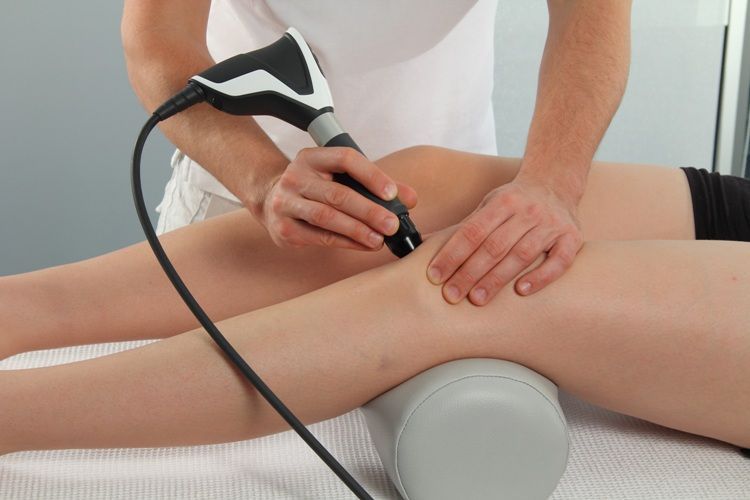
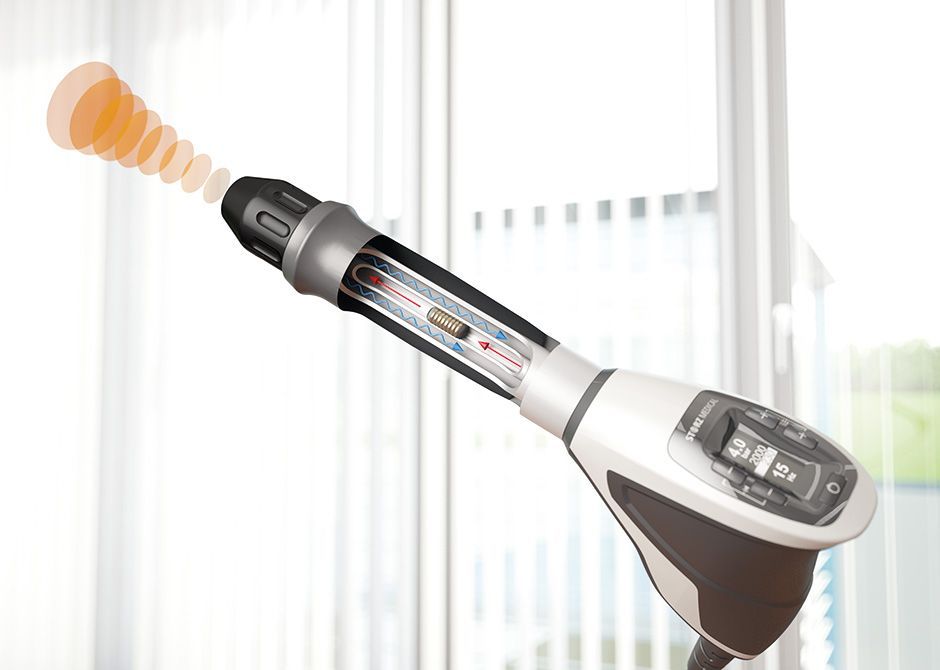
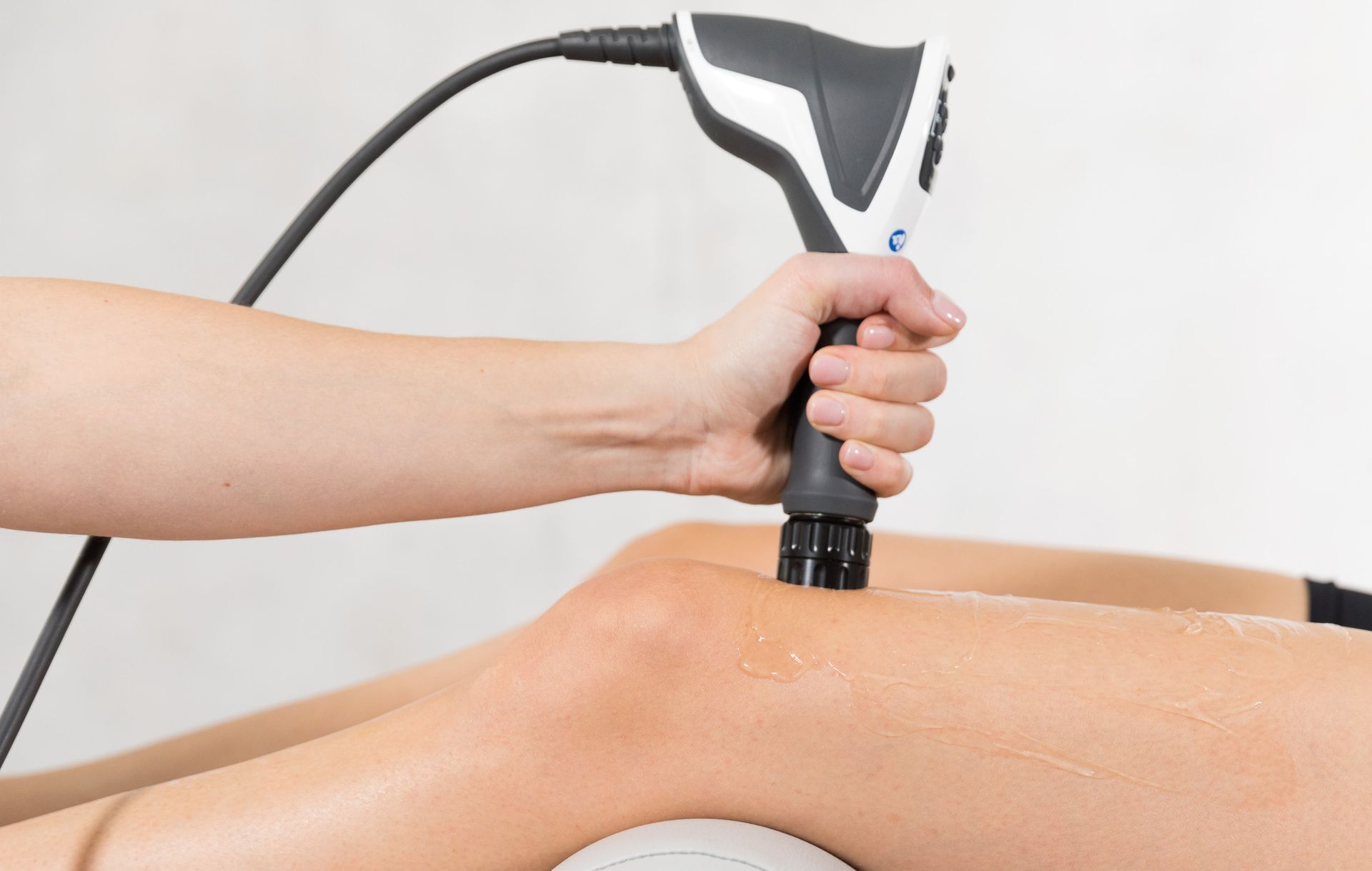
This is the crux of it. Extracorporeal shockwave therapy works by delivering focused acoustic pressure waves into soft tissue. In tendon problems, the aim is to stimulate the body's own repair response and modulate pain in a degenerative tendon — not to chip away at bone. So when shockwave helps a painful Haglund's, it's helping the tendinopathy and bursitis component, not the deformity.
For a lot of people that's a useful distinction rather than a disappointing one, because the tendon and bursa are frequently what actually hurts. Settle those down and load the tendon sensibly, and the heel can become far more liveable — even though the bump is still there on an X-ray.
Why focused shockwave for this particular problem Shockwave comes in two broad flavours, and they aren't interchangeable:
• Radial shockwave spreads its energy out near the surface — well suited to broader, shallower soft-tissue targets. • Focused shockwave concentrates its energy at a set depth, so it can be aimed precisely at a deeper structure.
The painful zone in a Haglund's-related problem — the deep Achilles insertion and the retrocalcaneal bursa — sits tucked behind and beneath the bump. That depth and precision is exactly what focused shockwave is designed for, which is why it's usually our preferred mode here rather than radial for this presentation. We carry both, so the choice is made to fit the target, not the machine we happen to own.
Hove Shockwave — Editor Handoff | Haglund's Deformity & Focused Shockwave
What the evidence says — kept honest
Shockwave therapy for Achilles tendinopathy is recognised in current NICE guidance (HealthTech guidance HTG426, 2026, which replaced the earlier interventional procedures guidance), covering both insertional and mid- portion presentations. That gives the underlying treatment a credible evidence base for Achilles tendon pain.
But we want to be precise about the Haglund's angle specifically, because the picture is more mixed:
- Research suggests shockwave can meaningfully reduce pain and improve function in insertional Achilles tendinopathy for a good proportion of people, especially when exercise-based treatment alone hasn't worked.
- However, studies that separated out patients with a Haglund's deformity found their improvements tended to be smaller than those without one. The bony impingement appears to blunt the response.
- Much of the benefit reported is short-to-medium term, and shockwave works best as part of a wider plan — not as a stand-alone quick fix.
- How we approach it at Hove Shockwave
- Because the bone-versus-soft-tissue question changes the whole plan, assessment comes first:
- Clinical assessment of the heel, ankle movement, calf flexibility and how you load the tendon, plus your history and footwear.
- On-site digital X-ray where appropriate. A Haglund's deformity is identified on a side-view heel X-ray, so being able to image on the day helps us judge how much of your pain is likely mechanical (the bump) versus soft-tissue (the tendon and bursa) — and therefore how much shockwave can realistically offer you.
- A course of focused shockwave, typically delivered as a small number of sessions spaced about a week apart, aimed at the insertion and bursa.
- Load management and rehab alongside it — sensible calf and tendon loading, footwear and activity adjustments. Shockwave tends to do its best work as the thing that lets you tolerate the exercise that drives the longer-term recovery.
- If assessment suggests the deformity is the dominant problem, we'll say so and point you toward the right onward opinion rather than putting you through a course of treatment that isn't likely to deliver.
So, realistic expectations
If you have insertional Achilles pain without much of a bony bump, focused shockwave has a reasonable chance of helping. If a sizeable Haglund's deformity is the main driver, shockwave may still take the edge off the soft-tissue pain, but the odds of it fully resolving things are lower — and surgery to address the bone is a conversation worth having sooner. We'd rather set that out before you start than oversell it.
Safety, side effects and who it's not for
Focused shockwave is non-invasive and needs no anaesthetic or recovery time. Most people feel it as a strong, tolerable tapping or ache during treatment, and the intensity is adjusted to what you can manage. Short-lived tenderness, redness or mild swelling around the heel for a day or two afterwards is common and settles on its own.
Hove Shockwave — Editor Handoff | Haglund's Deformity & Focused Shockwave
Shockwave is generally not suitable, or needs specific caution, if you are pregnant, have a blood-clotting disorder or take blood-thinning medication, have a pacemaker or other implanted electronic device near the treatment area, have an active infection, open skin or a tumour over the site, or if the area is still healing from a recent acute injury. It isn't used over the growth plates of children and adolescents.
Sudden, severe heel pain, an inability to push off or stand on tiptoe, or a sense that something has "given way" in the Achilles can indicate a tendon tear and should be assessed urgently rather than treated with shockwave. If you're unsure, ask us or your GP before booking — a short chat can save you a wasted appointment.
FAQ
Can shockwave therapy get rid of a Haglund's deformity or pump bump?
No. Shockwave therapy does not remove or shrink the bony bump. It works on the soft tissue around it — the Achilles tendon insertion and the bursa — so its aim is to reduce the associated pain, not to change the bone. If the bump itself is the main mechanical problem, surgery is the option that addresses the bone.
Does focused shockwave therapy for heel pain hurt?
Most people describe it as a strong tapping or deep ache during the session rather than sharp pain, and the intensity is dialled to what you can comfortably tolerate. A treatment takes only a few minutes. Some mild tenderness or slight swelling around the heel for a day or so afterwards is normal and settles by itself.
How many sessions?
A typical course is a small number of sessions spaced roughly a week apart, decided after your assessment. Shockwave usually works best combined with calf and tendon loading exercises and footwear or activity changes, and improvements tend to build over the weeks following the course rather than immediately.
What is the difference between focused and radial shockwave for the heel?
Radial shockwave spreads its energy near the surface, which suits broader, shallower targets. Focused shockwave concentrates its energy at a set depth so it can be aimed precisely at deeper structures. Because the painful zone behind a Haglund's deformity sits deep, focused shockwave is often the more suitable choice. We offer both and select based on your problem.
Is shockwave therapy for the heel supported by NICE?
Shockwave therapy for Achilles tendinopathy is covered by current NICE guidance (HTG426, 2026), which includes insertional cases at the heel. There is no separate NICE guidance for Haglund's deformity itself, so shockwave here is aimed at the associated tendon and bursa problem rather than the bony deformity. NHS availability varies locally.
When should I consider surgery for a Haglund's deformity?
Surgery is usually considered when a clearly bony deformity is the dominant cause of pain, when the impingement is significant, or when a fair trial of non-surgical care — including load management and treatments such as shockwave — hasn't given enough relief. It's a decision to make with an appropriate specialist, and part of our job is to help you judge whether you've reached that point.
Hove Shockwave — Editor Handoff | Haglund's Deformity & Focused Shockwave
Heel pain that won't settle? Let's find out what's driving it.
At Hove Shockwave we assess the heel properly — including on-site digital X-ray where appropriate — so you know whether your pain is coming from the bone, the tendon or both, before committing to any treatment. If focused shockwave is a sensible fit, we'll plan it around a proper rehab approach. If it isn't, we'll say so.
Hove Shockwave · 82 Goldstone Villas, Hove, BN3 3RU · 01273 324466
Serving Hove, Brighton & across Sussex. Focused & radial shockwave, EMTT and on-site digital X-ray under one roof.
This article is for general information and education only and does not constitute medical advice, diagnosis or a treatment recommendation for any individual. Outcomes from shockwave therapy vary from person to person, and no specific result is guaranteed. Suitability for treatment can only be determined following an individual clinical assessment. Always seek advice from a qualified healthcare professional about your own symptoms. Hove Shockwave is a trading name associated with Chiropractic First, Hove. Chiropractor: Dr. Lewis Kingsnorth, DC MChiro, registered with the General Chiropractic Council (Reg. 3359).
