Hove Shockwave Blog


Radial vs Focused Shockwave Therapy: What's the Difference, and Which Do You Need?

By Dr Lewis Kingsnorth DC MChiro, Doctor of Chiropractic · GCC Reg. 3359 · Hove Shockwave, 82 Goldstone Villas, Hove Published 10 November 2026 · Last reviewed 10 November 2026
Search for shockwave therapy and you'll quickly run into two terms: radial and focused. Some clinics offer one, some the other, and a few offer both. If you're living with a stubborn tendon problem and trying to decide where to go, it's reasonable to wonder whether the difference matters.
It does, though not in the way it's sometimes presented. Radial and focused shockwave aren't a basic and a premium version of the same thing. They're two different tools that deliver energy into the body in different ways, and each suits different problems. This guide explains how they work, what the research says, and how we decide which to use at Hove Shockwave.
What is shockwave therapy?
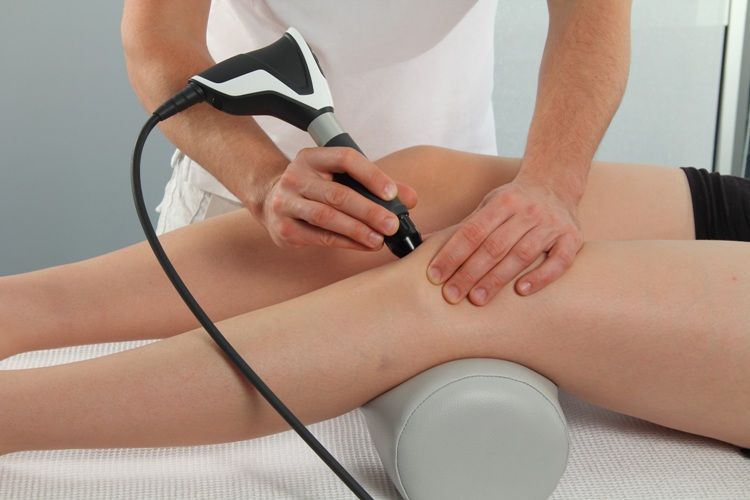
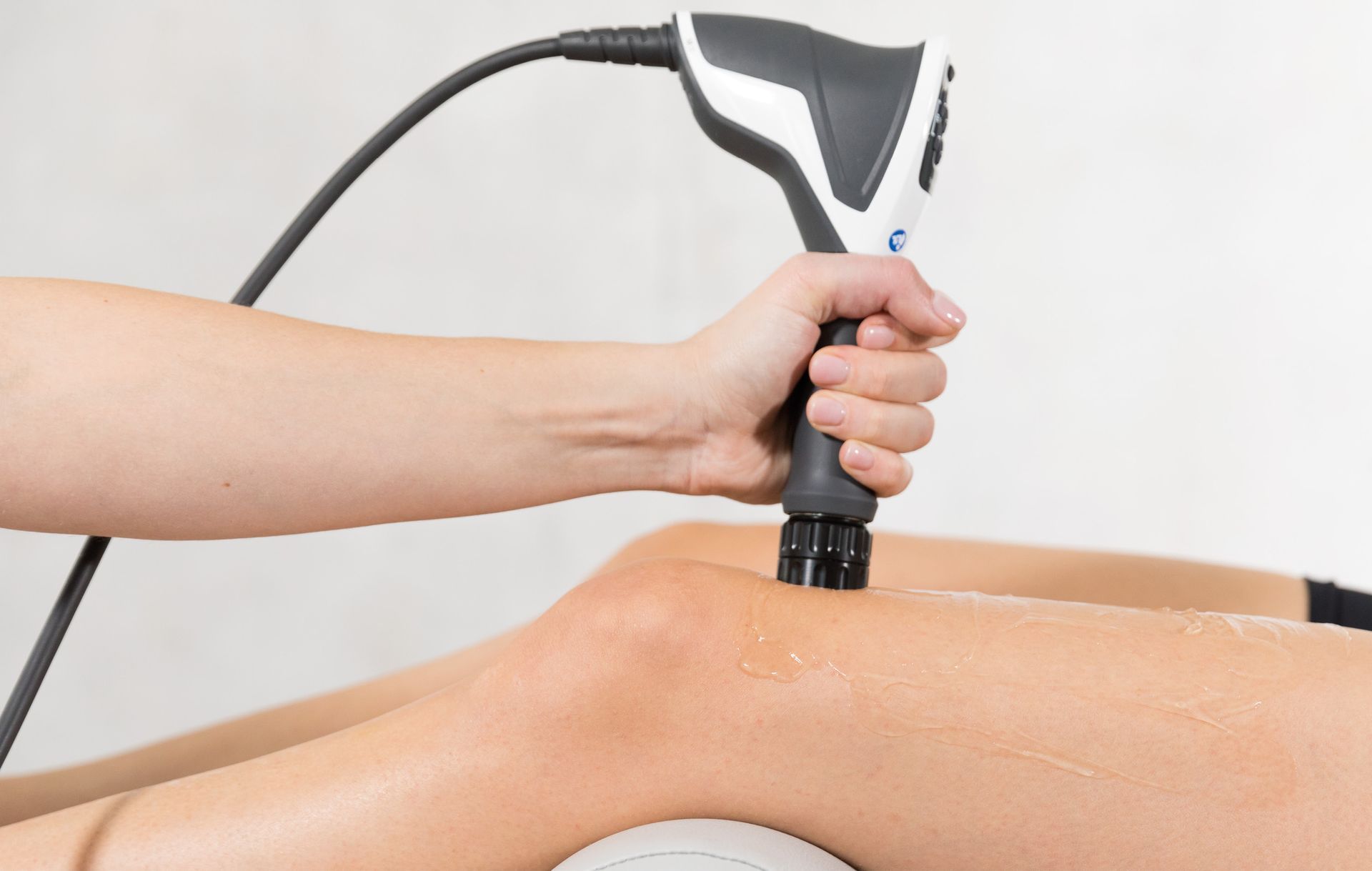
Shockwave therapy, also called extracorporeal shockwave therapy or ESWT, delivers short pulses of acoustic energy into the body through a handheld applicator placed on the skin with a layer of gel. It's mainly used for persistent tendon and soft tissue problems that haven't settled with rest and exercise alone, such as plantar heel pain, tennis elbow and Achilles tendinopathy.
Exactly how it works is still being researched. Current thinking is that the mechanical stimulus triggers biological responses in the treated tissue and can reduce pain sensitivity in the area. It's given as a course of short sessions and, at Hove Shockwave, always alongside a tailored exercise and loading programme, because the tissue still needs strengthening to cope with everyday life and sport.
Radial shockwave: how it works
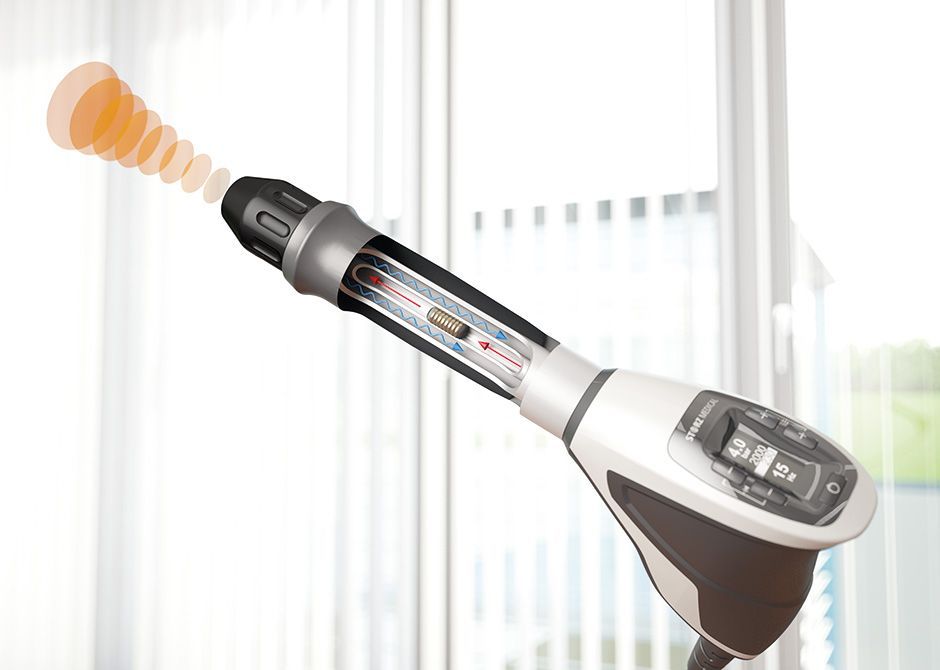
In a radial device, compressed air fires a small projectile inside the handpiece. It strikes an applicator head
resting on your skin, and that impact sends a pressure wave into the tissue.
Hove Shockwave · Editor handoff · Radial vs focused shockwave Page 3 of 12
The key point is where the energy goes. A radial pressure wave is strongest right at the skin and spreads outwards as it travels, so its intensity falls away with depth. The equipment manufacturer STORZ MEDICAL puts its useful therapeutic reach at around 3–4 cm.1
Strictly speaking, radial devices don't produce true shock waves. Physics research has shown that their pressure pulse builds too slowly to meet the technical definition, which is why you'll sometimes see the more accurate name radial pressure wave therapy.2 That doesn't make radial treatment less legitimate. It's simply a different kind of mechanical stimulus.
Because the energy spreads over a broader area near the surface, radial treatment suits problems that are relatively superficial or cover a wider region, and it's often used over the muscles and soft tissue around a sore tendon.
Focused shockwave: how it works
A focused device generates a true shock wave electromagnetically, piezoelectrically or electrohydraulically, then shapes it so the energy converges on a small focal zone inside the body, rather like a magnifying glass bringing sunlight to a point. The depth of that zone can be adjusted, for example by changing the stand-off cap on the applicator.
Peak pressures in the focal zone are much higher than radial devices produce; STORZ MEDICAL quotes figures around 100 times greater.1 Because the energy is concentrated where it's aimed, focused treatment suits small, precisely located sore spots, deeper tissue, and the points where tendons attach to bone.
How the energy is delivered: radial pressure waves are strongest at the skin and weaken with depth; focused shock waves converge on a zone that can be set at a chosen depth.
Upload radial-vs-focused-shockwave-diagram.png (supplied, 2400 px wide) with the caption above.
Alt text (116 chars): Diagram comparing radial pressure waves, strongest at the skin, with focused shock waves converging on a deeper zone
Hove Shockwave · Editor handoff · Radial vs focused shockwave Page 4 of 12
H3 Radial and focused shockwave compared Radial
Focused
Electromagnetic, piezoelectric or electrohydraulic source
In a focal zone beneath the skin
Focal depth adjustable to deeper tissue
Small and precise
Much higher in the focal zone
Precise sore points, deeper tissue, tendon-to- bone attachments
How it's generated
Where energy is strongest
Typical reach
Treatment area
Peak pressure
Often used for
Compressed-air projectile strikes the applicator
At the skin, weakening with depth
Around 3–4 cm
Broader
Lower
Superficial tendons, wider areas, surrounding muscle
Is focused shockwave better than radial?
Not across the board, and it's worth being wary of any blanket claim either way. Researchers increasingly
describe radial and focused shockwave as distinct therapies that happen to share many of the same uses.
Head-to-head evidence is still limited. A 2019 meta-analysis of placebo-controlled trials in plantar heel pain found that both focused and radial shockwave at medium energy did better than placebo. The authors suggested focused treatment might have a slight edge, but stressed that this rested on very few trials and needed confirming.
So the more useful question isn't which is better, but which is better for your problem. That depends on:
• Depth: how far beneath the skin the irritated tissue sits, which varies with the body part and your build.
• Size: whether the problem is a small, well-defined point or a broader area.
• Location: whether the pain centres on the point where a tendon attaches to bone, or along the tendon and the muscle around it.
• Sensitivity: how the area tolerates treatment, particularly over bony spots. • Your history: what you've already tried, including any previous shockwave.
How we match the type to the problem
Here's how the choice often plays out for common problems. It's a general guide rather than a rule; the final decision follows your assessment. Each linked article explains what the research shows for that condition, including where the evidence is stronger or weaker.
Hove Shockwave · Editor handoff · Radial vs focused shockwave Page 5 of 12
Problem
Plantar heel pain
Tennis elbow and golfer's elbow
Jumper's knee
High hamstring tendinopathy
How the choice often plays out
Focused can target the precise sore point at the heel; radial is useful along the arch and calf.
These tendons sit close to the surface, so radial is commonly used, with focused for a precise tender point.
Radial suits the middle of the tendon and the calf; focused is often preferred where pain sits at the back of the heel, at the tendon's attachment (see also Haglund's deformity).
The patellar tendon is fairly superficial, so either can be used depending on exactly where the pain is.
The gluteal tendons lie deeper, especially where there's more soft tissue around the hip, so focused is often helpful, with radial over the surrounding muscle.
The tendon attachment at the sit bone lies beneath the large buttock muscles, which makes depth and positioning important.
The tendons sit beneath other muscle and bone, so depth and arm position both matter.
Achilles tendinopathy
Lateral hip pain
Shoulder and rotator cuff
Link each condition name to its live article: plantar fasciitis (/plantar-fasciitis-shockwave-therapy-brighton), tennis elbow, golfer's elbow, Achilles tendinopathy, Haglund's deformity (/haglunds-deformity-shockwave-therapy-hove), jumper's knee, lateral hip pain / GTPS, high hamstring tendinopathy (/high-hamstring-tendinopathy-shockwave- therapy-hove/) and shoulder / rotator cuff. Confirm each live URL before publishing. Do not add knee osteoarthritis or calcific shoulder tendinopathy to this table (see compliance notes).
H3 Using both in one session
Sometimes the best plan uses both: focused treatment on a precise, sensitive point and radial treatment over
the surrounding muscle and soft tissue. It's one of the reasons we chose to offer both types.
Had shockwave before that didn't help?
We regularly see people who've had a course of shockwave elsewhere without the result they hoped for. There's rarely a single reason. Sometimes the diagnosis needs refining (pain thought to be coming from a tendon can turn out to be referred from the back, for example). Sometimes the exercise programme was missing or wasn't progressed. And sometimes a different type of shockwave, a different depth or a different treatment target is worth considering. A fresh assessment looks at all three.
Where does EMTT fit in?
EMTT (extracorporeal magnetotransduction therapy) is a different technology again. Rather than acoustic waves, it uses pulsed magnetic fields, and the applicator doesn't need to touch the skin. We offer it for selected cases, usually alongside shockwave and exercise. The research on EMTT is at an earlier stage than for shockwave; our EMTT article explains more.
What does each type feel like?
Both feel like rapid tapping or pulsing under the applicator. Radial treatment tends to feel spread over a wider area. Focused treatment feels more pinpoint, and when it's on the right spot you'll often recognise your familiar pain. We adjust the intensity to what you can tolerate, and a session usually takes around 15 minutes.
Afterwards the area may feel sore, red or tender for a day or two. Most people carry on with normal daily activities straight away, and we'll give you specific advice on exercise and activity between sessions. A course
Hove Shockwave · Editor handoff · Radial vs focused shockwave Page 6 of 12
usually involves several sessions about a week apart, and we'll give you an honest estimate once we've assessed you.
Is shockwave therapy right for you?
Shockwave isn't suitable for everyone. Tell us before treatment if any of the following apply, as we may need to adapt, delay or advise against treatment:
• You are, or might be, pregnant
• You have a bleeding disorder, or any treatment that affects how your blood clots • You have a pacemaker or another implanted electronic device
• You have cancer, or are being investigated for it
• There's an infection, wound or skin problem over the area to be treated
• You've recently had an injection into the same area
• The area is near growing bone in a child or teenager
We screen for all of these at your first appointment.
Get medical help, not shockwave, if you have:
- A sudden snap, pop or feeling of being kicked, followed by weakness or difficulty walking. This can mean a tendon has ruptured and needs same-day assessment at A&E or an urgent treatment centre.
- Calf pain with swelling, warmth or redness, which can be a sign of a blood clot: call NHS 111 the same day, or 999 if you're also short of breath or have chest pain
- A hot, red, swollen joint, especially with a high temperature
- Pain after a significant fall or injury, or if you can't put weight on the limb
- Numbness, pins and needles or weakness spreading into an arm or leg
- Night pain, unexplained weight loss or feeling generally unwell alongside your pain
- Radial and focused shockwave in Hove
Hove Shockwave is at 82 Goldstone Villas, Hove, BN3 3RU, close to Hove railway station, and sees patients from across Brighton, Hove, Portslade, Shoreham and wider Sussex.
• Radial and focused shockwave and EMTT under one roof, so the type of treatment can be chosen to suit your problem
• Assessment by Dr Lewis Kingsnorth DC MChiro, registered with the General Chiropractic Council and qualified since 2009
• On-site digital X-ray if it's clinically necessary
• An exercise and rehabilitation plan with every course
• Early and evening appointments: from 6:45am on Mondays, Tuesdays, Thursdays and Fridays, and until 8pm on Mondays and Thursdays
• Recognised by AXA and Vitality (check your policy for cover)
Not sure which type you need? You don't have to decide.
Book an assessment and we'll examine the problem, explain what we think is going on, and recommend the approach that fits, including whether shockwave is right for you at all.
Book online Call 01273 324466
Hove Shockwave · Editor handoff · Radial vs focused shockwave Page 7 of 12
EDITOR NOTE — CTA
“Book online” links to https://hoveshockwave.janeapp.co.uk . “Call” button: tel:+441273324466.
- Frequently asked questions
- What is the difference between radial and focused shockwave therapy?
Radial shockwave uses a compressed-air-driven projectile to create pressure waves that are strongest at the skin and weaken as they spread deeper, with useful effects reaching around 3 to 4 cm. Focused shockwave concentrates its energy in a small focal zone that can be set at a chosen depth beneath the skin, with much higher peak pressure at that point. Radial suits broader, more superficial areas; focused suits small, precise or deeper targets.
Is focused shockwave better than radial?
Not across the board. They are different tools rather than basic and premium versions of the same treatment. Both have been studied for common tendon problems, and head-to-head evidence is still limited. The better choice depends on how deep the problem tissue sits, how large the area is, and whether the pain centres on a precise point such as where a tendon attaches to bone. Some treatment plans use both.
Which type of shockwave is more painful?
Both can be uncomfortable, and how it feels varies from person to person. Radial treatment is spread over a wider area and can feel sharper over bony spots. Focused treatment feels more pinpoint and often reproduces your familiar pain when it is on target. The intensity is adjusted to what you can tolerate, and any soreness afterwards usually settles within a day or two.
How deep does shockwave therapy reach?
Radial pressure waves are strongest at the skin and weaken with depth; the manufacturer STORZ MEDICAL puts their therapeutic reach at around 3 to 4 cm. Focused shock waves can be aimed at a focal zone deeper in the tissue, and that depth can be adjusted to suit the area being treated. How deep the target sits depends on the body part and your build.
How many shockwave sessions will I need?
Most people have a course of several sessions, usually about a week apart, and each session takes around 15 minutes. The number depends on the condition, how long you have had it and how you respond. We will give you an honest estimate after your assessment and review your progress as you go.
Can radial and focused shockwave be used together?
Yes. In some cases we use focused shockwave on a precise, sensitive point, such as where a tendon attaches to bone, and radial shockwave over the surrounding muscle and soft tissue in the same session. Whether that makes sense for you depends on your diagnosis.
References
1. STORZ MEDICAL AG. Physics and technology: what are shock waves? storzmedical.com/en/physics-and-technology
2. Cleveland RO, Chitnis PV, McClure SR. Acoustic field of a ballistic shock wave therapy device. Ultrasound in Medicine & Biology. 2007;33(8):1327–1335. doi:10.1016/j.ultrasmedbio.2007.02.014
Hove Shockwave · Editor handoff · Radial vs focused shockwave Page 8 of 12
- Al-Abbad H, Allen S, Morris S, et al. The effects of shockwave therapy on musculoskeletal conditions based on changes in imaging: a systematic review and meta-analysis with meta-regression. BMC Musculoskeletal Disorders. 2020;21:275. doi:10.1186/ s12891-020-03270-w
- Wang Y-C, Chen S-J, Huang P-J, et al. Efficacy of different energy levels used in focused and radial extracorporeal shockwave therapy in the treatment of plantar fasciitis: a meta-analysis of randomized placebo-controlled trials. Journal of Clinical Medicine. 2019;8(9):1497. doi:10.3390/jcm8091497
Disclaimer: This article is for general information only and isn't a substitute for an individual assessment. Shockwave therapy isn't suitable for everyone, and results vary from person to person. If you're worried about your symptoms, speak to a registered healthcare professional; in an emergency, call 999. “Dr” is a courtesy title used by chiropractors registered with the General Chiropractic Council; Dr Kingsnorth is a chiropractor, not a registered medical practitioner.
