Hove Shockwave Blog

Padel Elbow & Tennis Elbow (Lateral Epicondylitis): How
Shockwave Therapy Can Help in Brighton & Hove
Racquet and paddle sports are booming across Sussex — and so is a nagging pain on the outer elbow. Here's what padel and tennis elbow actually is, how it's treated, and where shockwave therapy fits when it won't settle.
By Dr. Lewis Kingsnorth, DC MChiro · Chiropractor, GCC Reg. 3359 · Hove Shockwave, 82 Goldstone Villas, Hove
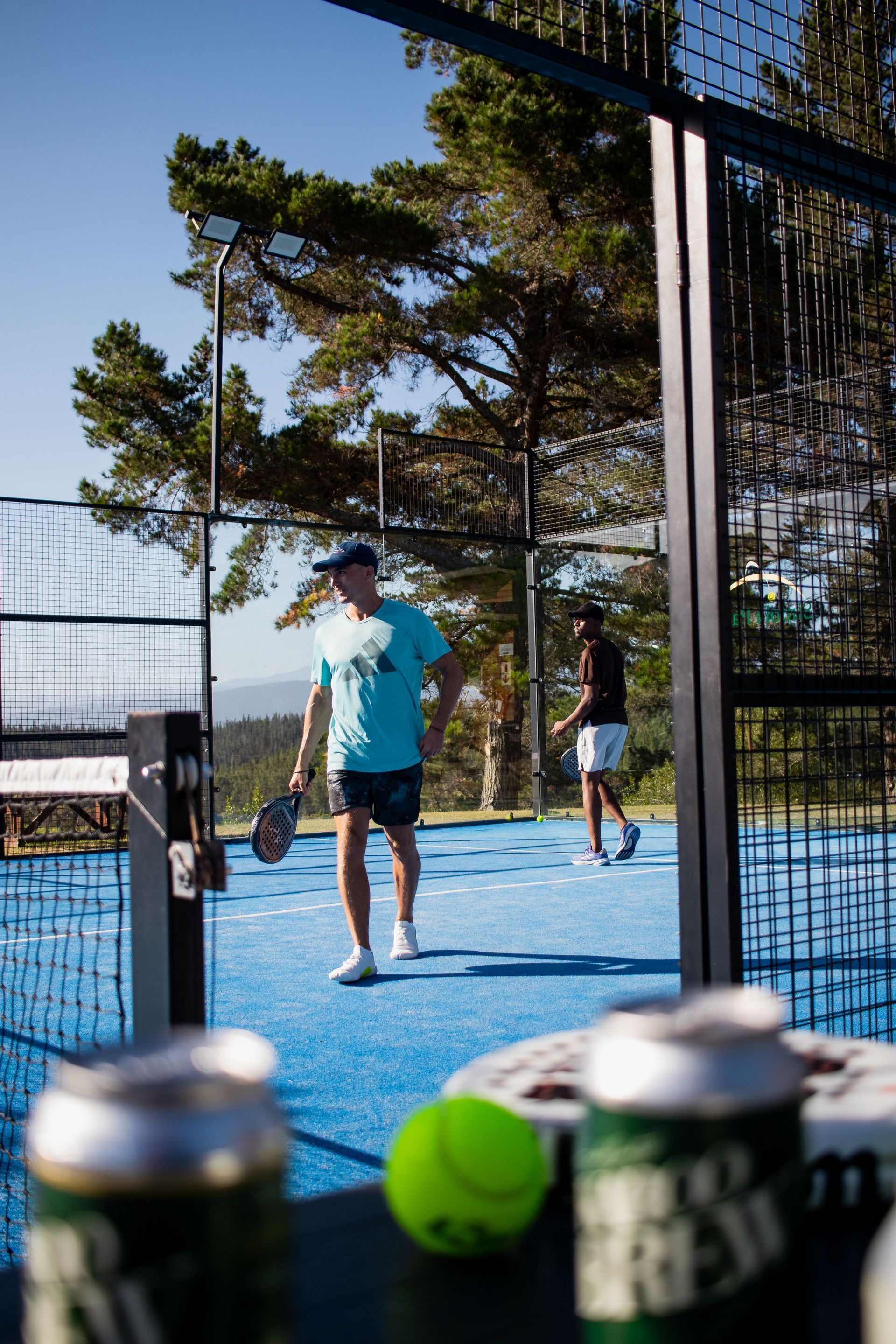
Padel has become one of Britain's fastest-growing sports, and new courts have appeared right across Sussex over the past couple of years. Pickleball is close behind, and the tennis courts are as busy as ever. With that surge has come a familiar complaint in our treatment room: a nagging pain on the outer point of the elbow that flares when you grip a racquet, lift a kettle or turn a key. Racquet and paddle players tend to call it tennis elbow or padel elbow; its clinical name is lateral epicondylitis, or lateral elbow tendinopathy. We have seen a steady run of these elbows over the past six months — likely helped along by a glorious British summer that got everyone out onto court.
This article explains what padel and tennis elbow really is, why paddle and racquet sports trigger it, how it is normally treated, and where shockwave therapy can earn its place when the elbow simply refuses to settle.
What is padel elbow (and tennis elbow)?
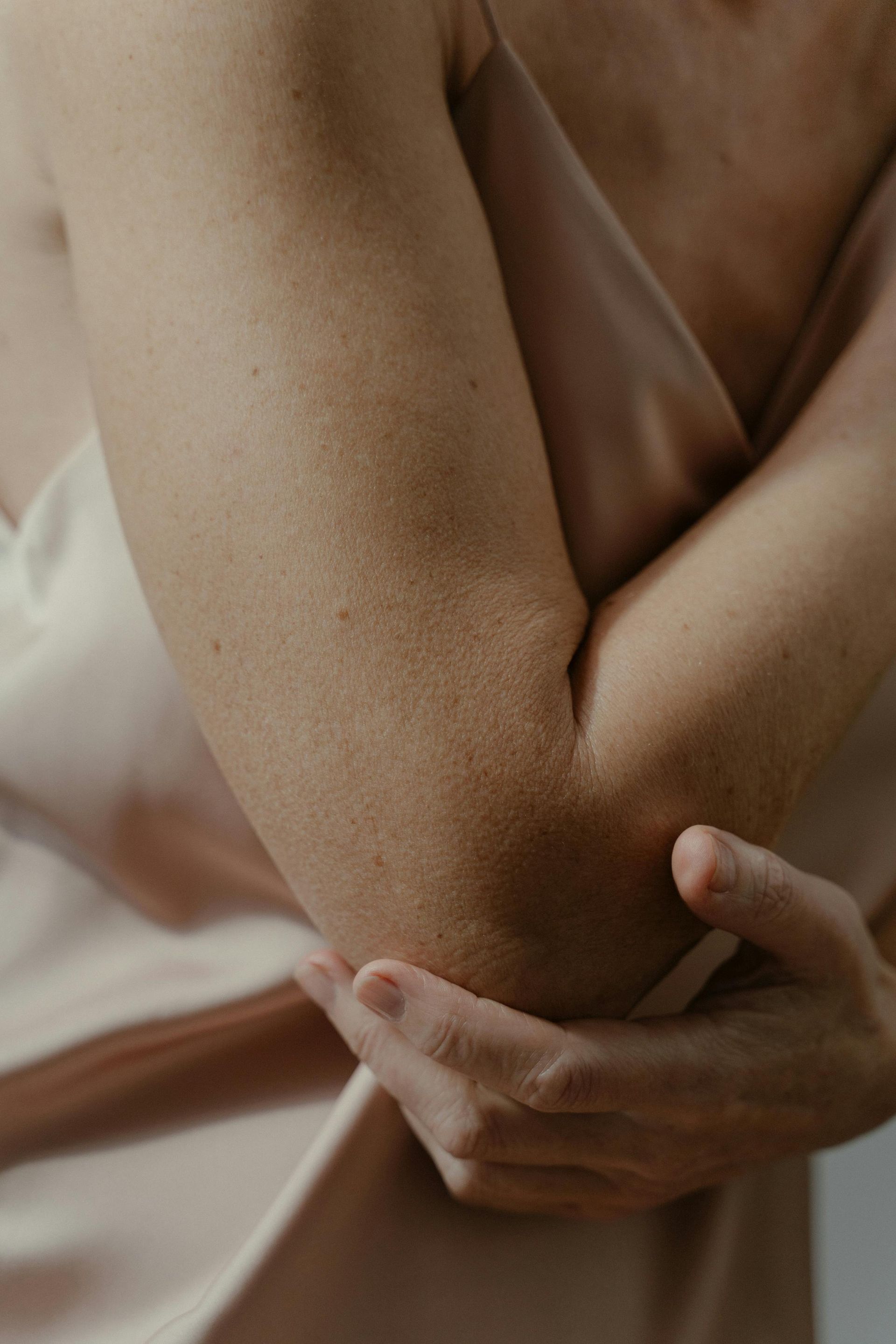
The trouble sits where the forearm's extensor tendons anchor to the bony point on the outside of the elbow — the lateral epicondyle. Repetitive gripping and wrist extension can overload that attachment, leaving the tendon painful, tender and slow to settle. It is often triggered by a change in load: a new sport, a sharp jump in training, or months of the same movement at work. And it is not only athletes: decorators, plumbers, gardeners and anyone doing sustained gripping are all well represented alongside the racquet players. If you've read our
[INTERNAL LINK → tennis elbow post] , much of this will be familiar — the sport that provokes it changes, but the tendon does not.
Despite the old "-itis" label, which suggests simple inflammation, the condition is now understood rather differently. The current picture is of a tendon that has struggled to repair itself under repeated load — a tendinopathy rather than a straightforward inflammatory flare. That distinction matters, because it explains why resting alone rarely fixes it, and why gradually rebuilding the tendon's capacity is central to a lasting recovery.
Why paddle and racquet sports are such common culprits
Padel, pickleball and tennis all load the outer elbow in a similar way: repeated gripping, repeated wrist extension, and the shock of ball-on-strings travelling up the forearm. Padel and pickleball in particular tend to draw in players who are new to racquet sports, or returning after years away — and it is often that sudden change in load, several enthusiastic sessions a week on a body not yet conditioned for it, that tips a healthy tendon into a painful one.
Technique plays its part too. A grip that is too tight, an off-centre strike, or a wrist-led backhand all funnel extra strain into the tendon's anchor point. It is why simply "playing through it" tends to make things worse, and why addressing how you move — not just the sore tendon itself — matters so much to getting better and staying better.
How padel and tennis elbow is usually treated
The good news is that most cases settle with time, and the cornerstone of recovery is well established. It has two parts: easing the aggravating load — not stopping altogether, but dialling back what provokes the pain — and following a graded strengthening programme that steadily rebuilds the tendon's tolerance to work. Done properly, this progressive loading is the single most important ingredient in a durable recovery, which is why a passive treatment on its own is rarely the whole answer.
The snag is that a stubborn minority of elbows stay sore for many months. And while the elbow is very painful, doing that strengthening work properly is difficult — the tendon simply won't tolerate the load it needs in order to recover. That frustrating loop, where the pain blocks the very rehab that would resolve it, is exactly where shockwave therapy can help.
Where shockwave therapy fits in
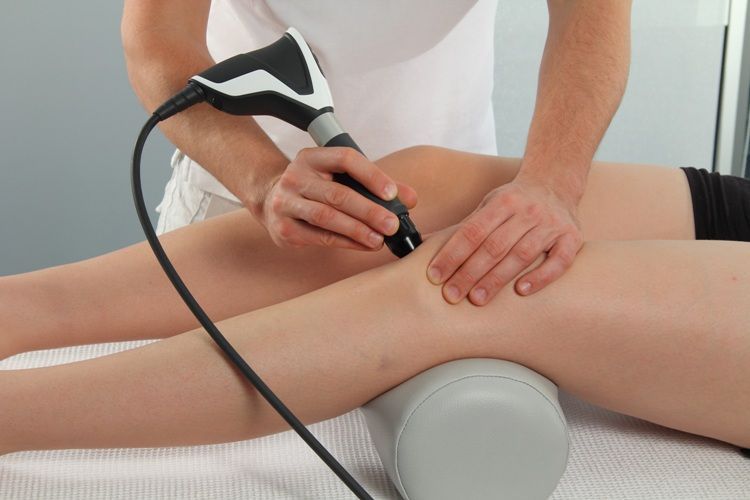
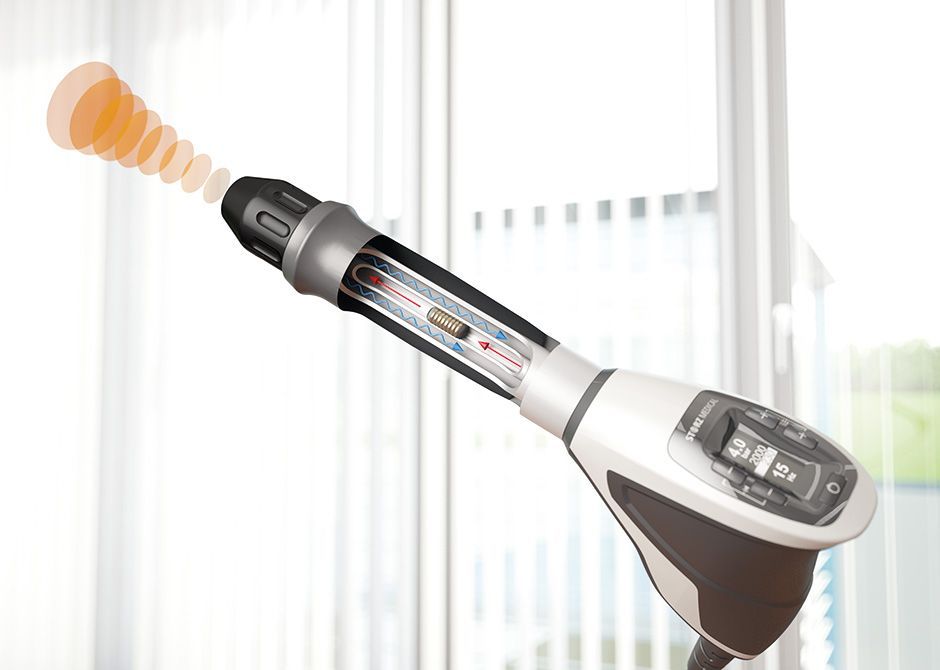
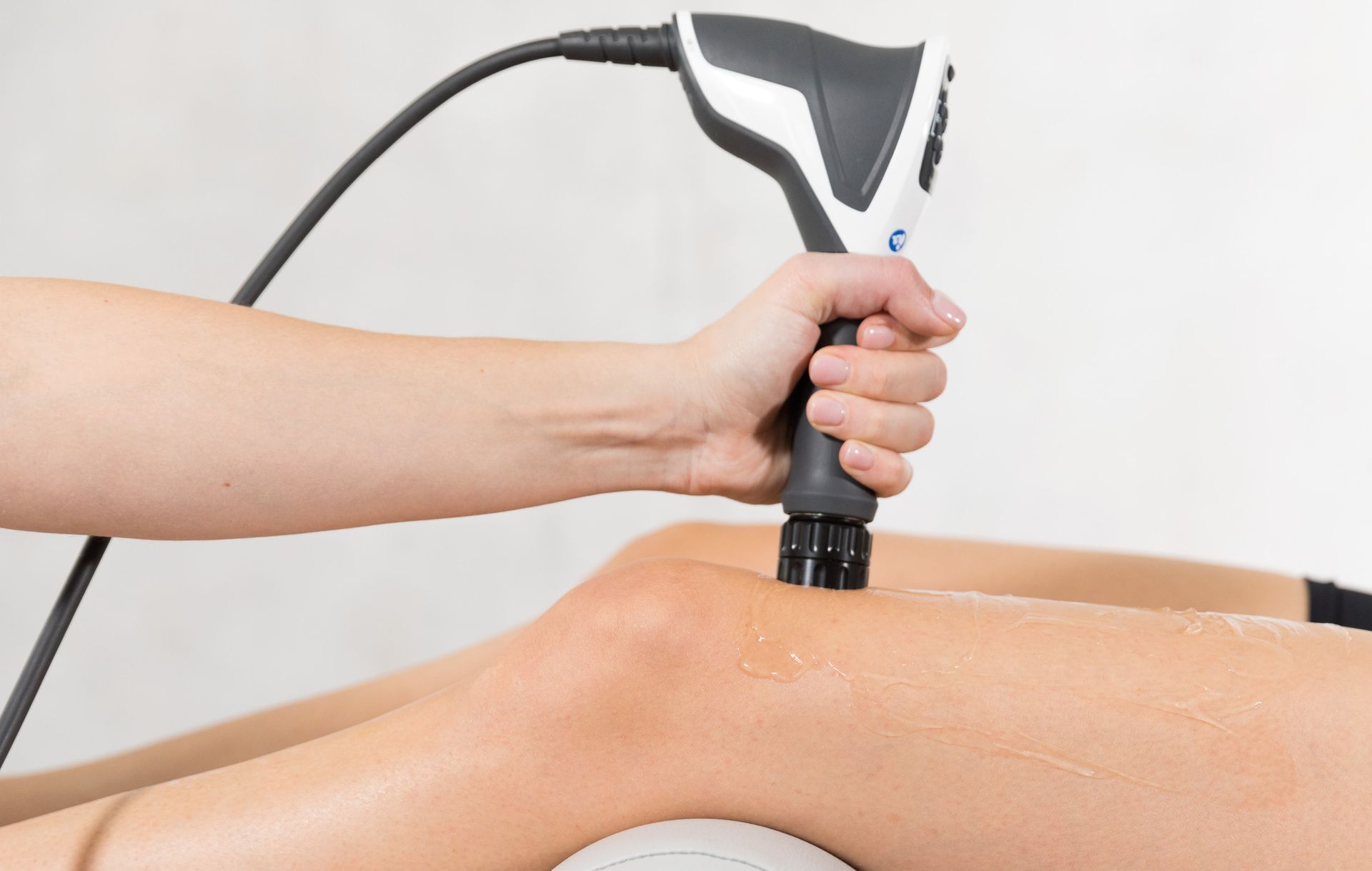
Shockwave therapy (extracorporeal shockwave therapy, or ESWT) delivers focused pressure waves into the affected tendon. The aim is to stimulate the body's own repair response and to help settle pain, so that the all- important rehabilitation can move forward. It is non-invasive, needs no injection and no anaesthetic, and is usually given as a short course of weekly sessions, each taking around 15 minutes. Most people can carry on playing their sport while the course is under way, easing back only as much as their symptoms genuinely require.
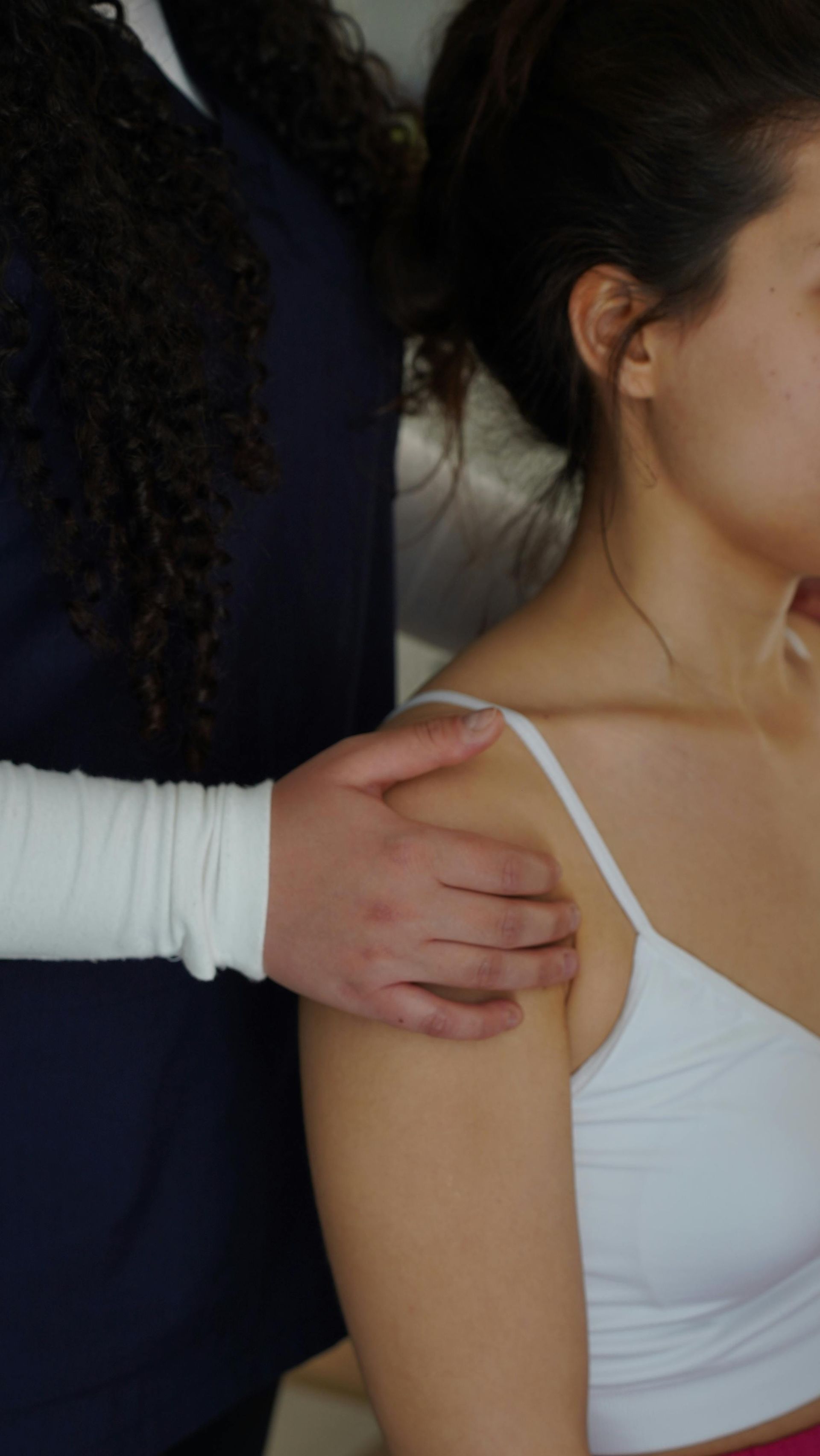
Shockwave is only part of the picture, though, and we treat it that way. A course of care with us also includes rehabilitation of the forearm and grip muscles, technique correction for racquet and paddle players, and hands-on soft-tissue work — including myofascial release using a smooth-edged tool. Bringing these together gives the tendon the best chance to recover, and just as importantly reduces the likelihood of the problem returning once you're back on court.
We are also the only clinic in Sussex to offer both radial and focused shockwave alongside EMTT (extracorporeal magnetotransduction therapy), a related magnetic-field treatment delivered with the STORZ MEDICAL Magnetolith. Having more than one modality under one roof means we can match the approach to the tendon in front of us, rather than applying a single technique to every elbow.
What the evidence says
It is worth being straight about the evidence. The National Institute for Health and Care Excellence (NICE) has assessed shockwave for stubborn tennis elbow and found that it raises no major safety concerns; NICE also judged the evidence on how well it works to be inconsistent, and advises using it with special arrangements for consent and review. In plain terms, shockwave is best understood as one option within a proper plan — worth considering when simpler measures have stalled — rather than a guaranteed fix or a substitute for the strengthening work. We think being honest about that is part of doing the job well, and it is why we always pair the treatment with a proper rehabilitation programme rather than offering it in isolation.
When to get it checked first
Outer-elbow pain is usually a straightforward tendon problem — but not always. Please see your GP or a suitably qualified clinician promptly, rather than assuming it is tennis elbow, if you notice any of the following:
- Pain after a significant fall or a direct blow to the elbow, or any obvious deformity
- Numbness, pins and needles or weakness spreading into the forearm, hand or fingers (which can point to a nerve issue rather than the tendon)
- A hot, swollen or red joint, or feeling generally unwell or feverish
- Severe or unrelenting night pain, or pain that is steadily worsening despite rest
- Locking, giving way, or a marked loss of movement at the elbow
- A proper assessment is there to make sure the diagnosis is right before any treatment begins. At Hove Shockwave we examine the elbow thoroughly first, using on-site digital X-ray if necessary to rule out other causes, so we can be honest about whether treatment is likely to suit you and what a realistic recovery looks like.
Padel and tennis elbow treatment in Hove
As a pickleball player myself, I have a good deal of sympathy for anyone whose racquet or paddle habit has turned on them. Our clinic is on Goldstone Villas in Hove, a short walk from Hove station, and we look after players and manual workers from across Brighton, Hove and the wider Sussex area. We are recognised by Vitality and AXA, and appointments are straightforward to arrange.
Book an elbow assessment
If an outer-elbow pain has outstayed its welcome, we can assess it properly and set out your options honestly. Call 01273 324466 or book online.
Hove Shockwave · 82 Goldstone Villas, Hove, BN3 3RU ·
Frequently asked questions
Is padel elbow the same as tennis elbow?
Yes. "Padel elbow", "pickleball elbow" and "tennis elbow" are all everyday names for the same condition — lateral epicondylitis, or lateral elbow tendinopathy. It affects the tendons on the outside of the elbow, and the sport that provoked it does not change the underlying problem or the way it is treated.
How long does a course of shockwave therapy take?
Shockwave is typically delivered as a short course of weekly sessions, with each session taking around 15 minutes. The exact number of sessions depends on how the tendon responds, which we review as we go. Improvement usually builds gradually over the weeks of the course and beyond, as the tendon repairs.
Does shockwave therapy on the elbow hurt?
Most people find it very manageable. You'll feel a firm tapping sensation over the tendon, and the intensity can be adjusted to keep it comfortable. It is non-invasive and needs no anaesthetic, and any tenderness afterwards is usually mild and short-lived.
Can I keep playing padel or tennis during treatment?
Usually, yes. Most people can carry on playing their sport while the course is under way, easing back only as much as their symptoms require. We'll give you specific guidance on load, technique and strengthening as part of your programme — what you do between sessions matters as much as the treatment itself.
Do I need a scan or X-ray before treatment?
Not always. We assess the elbow clinically first and use on-site digital X-ray only if necessary — for example, to help rule out other causes of outer-elbow pain. The purpose is simply to make sure the diagnosis is right before any treatment begins.
What if shockwave doesn't work for me?
Shockwave is one option among several, not a guaranteed fix. Because we offer radial and focused shockwave, EMTT and hands-on rehabilitation under one roof, we can adjust the approach if the elbow isn't responding — and we'll always be honest with you about whether continuing is worthwhile or whether onward referral makes more sense.
This article is for general information only and is not a substitute for individual medical advice, diagnosis or treatment. Outcomes vary from person to person and no result can be guaranteed. Always seek the advice of a suitably qualified healthcare
professional about your specific condition. Dr Lewis Kingsnorth is a chiropractor registered with the General Chiropractic Council (Reg. 3359).
