Hove Shockwave Blog


Greater Trochanteric Pain Syndrome: How Shockwave
Therapy Can Help With Lateral Hip Pain
in Brighton &
Hove
By Dr Lewis Kingsnorth DC MChiro · Hove Shockwave, 82 Goldstone Villas, Hove · GCC Reg. 3359
If you have a deep, nagging ache on the outside of your hip — the kind that flares when you climb stairs, get up from a chair, or try to sleep on that side — you may be dealing with greater trochanteric pain syndrome (GTPS). It is one of the most common causes of hip pain we see, yet it is often mislabelled and under-treated. The good news is that it usually responds well to non-surgical care, and shockwave therapy is one of the better-evidenced options for the tendon problem that drives it.
What is greater trochanteric pain syndrome?
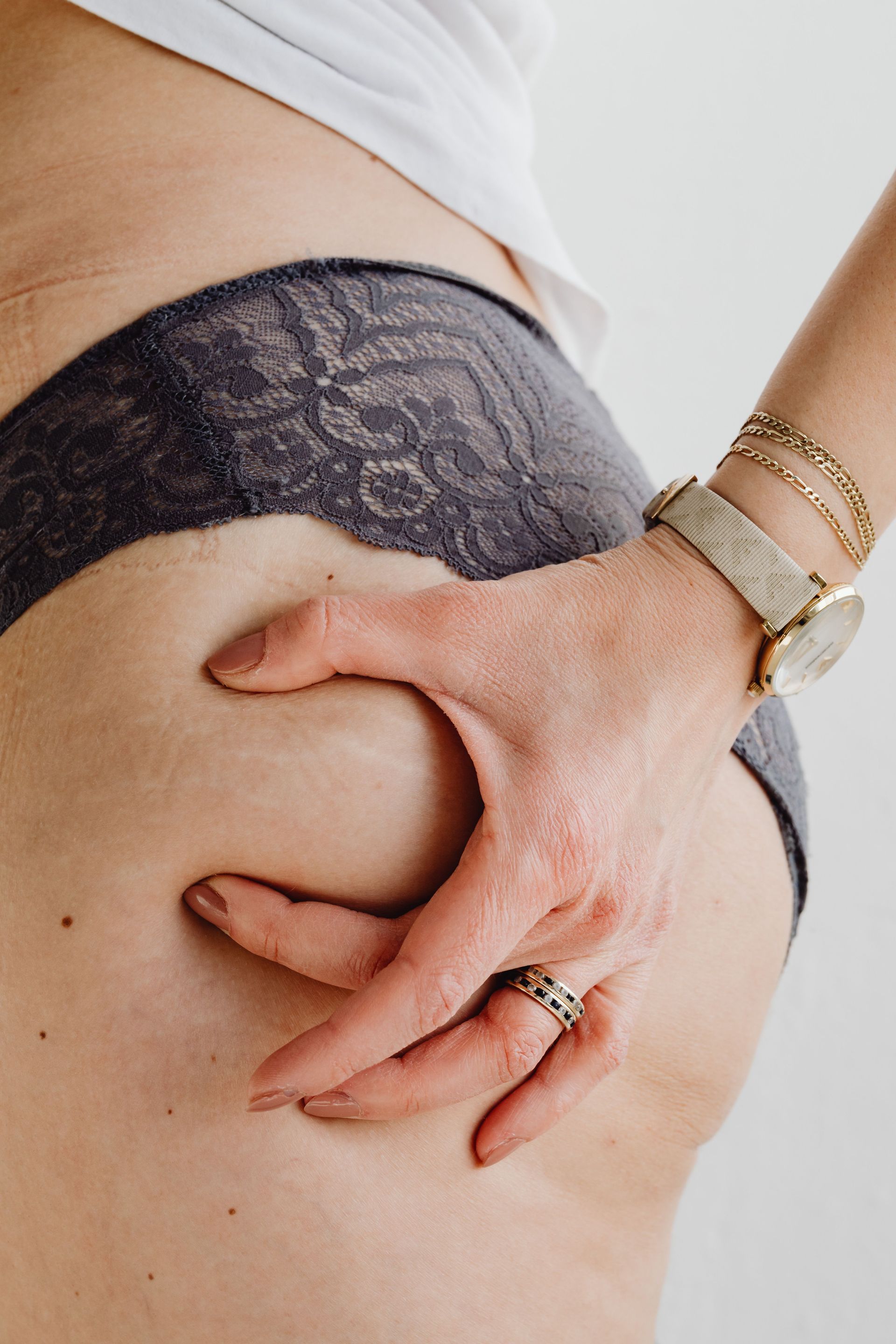
GTPS is the medical term for pain and tenderness over the greater trochanter — the bony point you can feel on the outer side of your hip. For years it was called “trochanteric bursitis,” on the assumption that the problem was an inflamed bursa (a small fluid-filled cushion). We now know that in the large majority of cases the main driver is gluteal tendinopathy: irritation, overload or degeneration of the gluteus medius and minimus tendons where they attach to the hip. Any bursal irritation tends to be secondary.
Common symptoms
- Pain and tenderness over the outer hip, sometimes spreading down the outside of the thigh.
- Pain when lying on the affected side — disturbed sleep is a classic complaint.
- Discomfort climbing stairs, standing on one leg, or after prolonged sitting.
- Aching that builds during or after walking, running or a busy day on your feet.
- Why “bursitis” is usually the wrong label
- This distinction matters because it changes the treatment. A true inflammatory bursitis might quieten with rest or a steroid injection — but a tendinopathy behaves differently. Tendons need appropriate, graded load to recover, and repeated steroid injections may give short-term relief while doing little for the
underlying tendon over time. Recognising GTPS as a tendon problem is the first step toward a plan that actually addresses the cause.
Who tends to develop it?
GTPS is most common in women between roughly 40 and 60, but it affects active people of all kinds. Frequent triggers include a sudden increase in walking or running, weakness in the gluteal muscles, and postures that compress the tendon — such as sitting cross-legged or “hanging” on one hip when standing. Lower back, hip or knee problems that alter your gait can contribute too. In a city like Brighton & Hove, with its hills, seafront runs and long walks, an unaccustomed spike in activity is a familiar starting point.
Why GTPS can be slow to settle
Tendons have a relatively poor blood supply and the gluteal tendons are compressed against the greater trochanter with certain movements, so the area can stay irritable for months. Complete rest rarely resolves it and can leave the tendon less tolerant of load. That is why a structured, active approach usually works better than waiting it out.
How shockwave therapy helps gluteal tendinopathy
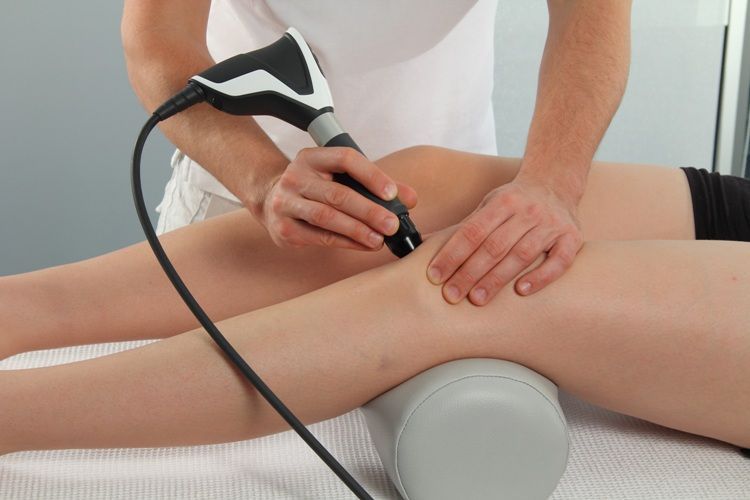
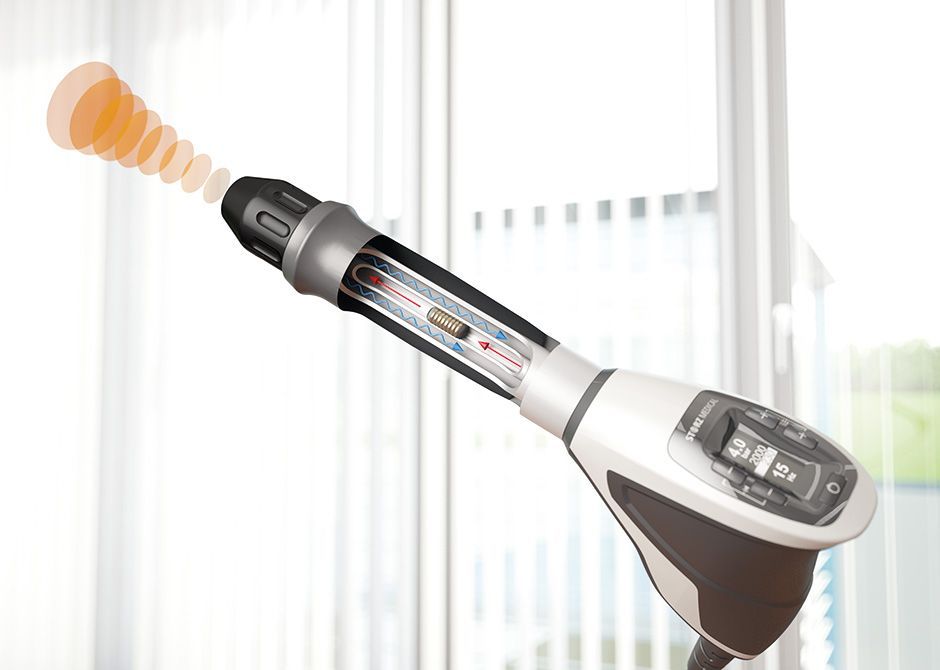
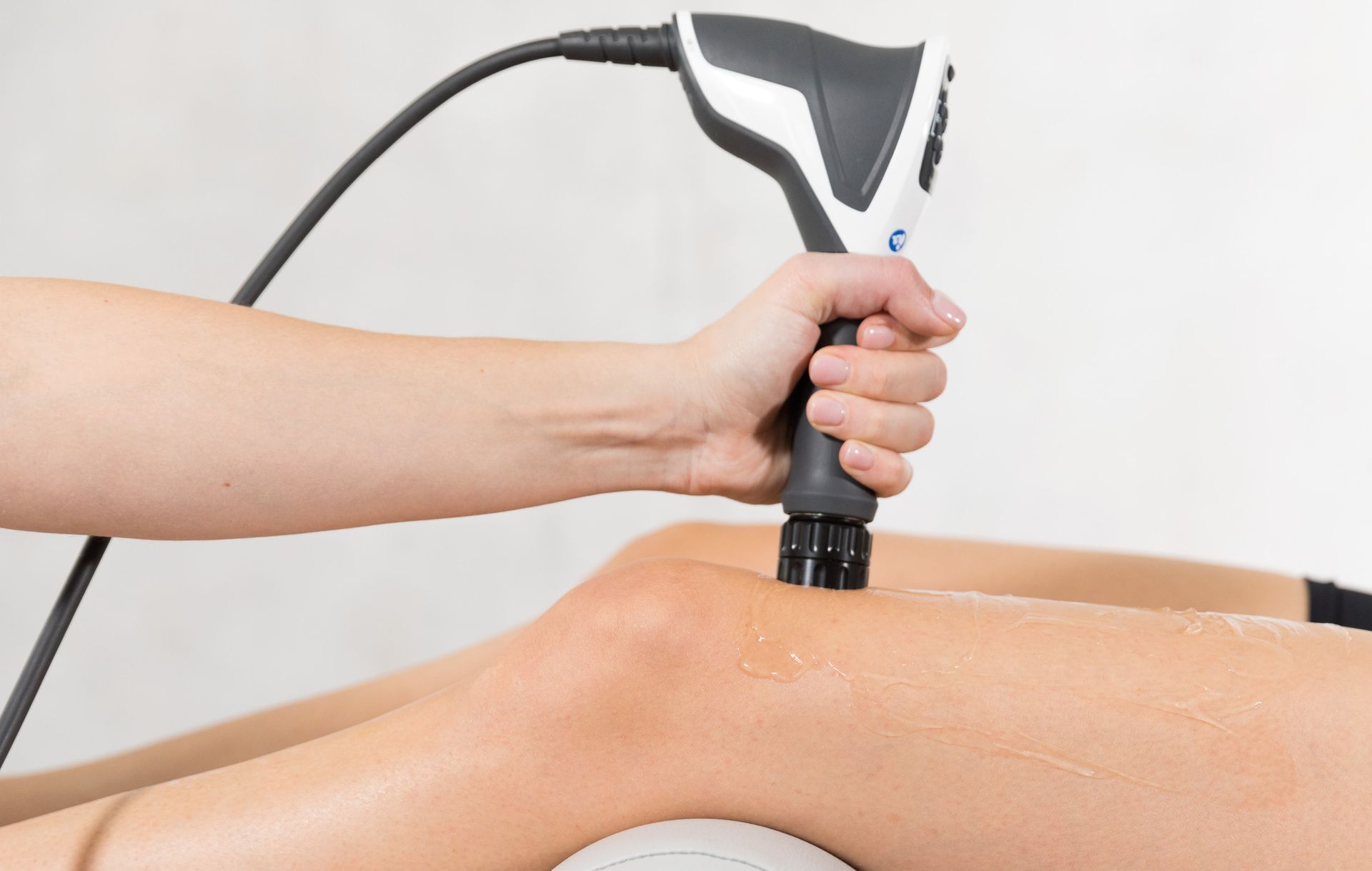
Extracorporeal shockwave therapy (ESWT) delivers controlled acoustic energy pulses into the affected tendon. This is thought to stimulate local blood flow, prompt a natural healing response in the tissue, and reduce pain signalling — without injections, medication or downtime. For chronic gluteal tendinopathy, ESWT is supported by clinical research, particularly when it is combined with a targeted strengthening programme. Studies have reported good improvement rates over the medium to longer term, and shockwave has compared favourably with corticosteroid injection over time. It is not an instant fix — results build gradually over several weeks — and individual responses vary, but for the right patient it is a well-tolerated, non-surgical option.
At Hove Shockwave we offer radial, focused and EMTT (Magnetolith) technology, allowing treatment to be matched to the depth and nature of the problem — useful for a deeper structure like the gluteal tendons.
What to expect at Hove Shockwave
Treatment always starts with a thorough assessment by Dr Lewis Kingsnorth DC MChiro (GCC Reg. 3359) to confirm the diagnosis and rule out other causes of lateral hip pain, such as referred pain from the lower back or hip joint. If shockwave is appropriate, a typical course is a small number of weekly sessions — commonly three to five — each lasting around 10–15 minutes. You will feel a strong tapping sensation and some discomfort over the tender area, but it is brief and the intensity is adjusted to your tolerance. Crucially, shockwave is delivered alongside a tailored loading and strengthening plan and simple advice on managing your activity, so the tendon is rebuilt as well as stimulated.
What you can do alongside treatment
- Ease off compression positions: avoid crossing your legs or “hanging” on one hip, and place a pillow between your knees when lying on your side.
- Modify rather than stop: reduce painful spikes in activity instead of resting completely.
- Build gluteal strength with a clinician-guided programme — this is central to lasting recovery.
- Manage sudden increases in walking, running or training load.
- When to seek help — and red flags
- It is worth getting outer hip pain assessed if it is not improving, is interfering with sleep, or is limiting your activity. Seek prompt medical advice if you have night pain unrelieved by changing position, fever,
unexplained weight loss, a history of cancer, an inability to bear weight after a fall or injury, or numbness, pins and needles, or weakness spreading down the leg. Any changes to bladder or bowel control should be treated as urgent. These features point to causes that need separate assessment.
Book a hip pain assessment in Hove
Hove Shockwave is based at 82 Goldstone Villas, Hove, BN3 3RU — a short walk from Hove station and easy to reach from across Brighton & Hove and the surrounding area. We accept Vitality and AXA. To arrange an assessment for lateral hip pain, book online at [BOOKING LINK] or call [01273 324466 – confirm].
Frequently asked questions
What is greater trochanteric pain syndrome (GTPS)?
GTPS is the medical term for pain and tenderness over the bony point on the outside of the hip (the greater trochanter). It was once called trochanteric bursitis, but research now shows the most common cause is gluteal tendinopathy — irritation or degeneration of the gluteal tendons that attach there. It often causes pain when lying on that side, climbing stairs or walking.
Does shockwave therapy work for GTPS?
Shockwave therapy (ESWT) is a recognised, non-surgical option for chronic gluteal tendinopathy and is supported by clinical research, particularly when combined with a targeted strengthening programme. Studies have reported good improvement rates over the medium to longer term, and it has compared favourably with steroid injection over time. Results build gradually over several weeks and individual responses vary.
Is shockwave therapy for the hip painful?
Most people find it manageable. You will feel a strong tapping sensation and some discomfort over the tender area during treatment, but it is brief — each session usually lasts around 10–15 minutes — and any soreness afterwards normally settles within a day or two. The intensity is adjusted to your tolerance.
How many sessions will I need?
A typical course is a small number of weekly sessions — commonly three to five — though this depends on how long you have had the problem and how you respond. Your clinician will agree a plan with you after assessment. Shockwave works best alongside a tailored loading and strengthening programme.
Is my hip pain bursitis or gluteal tendinopathy?
They overlap, which is why the umbrella term GTPS is now preferred. While a bursa can become irritated, research shows the main driver in most cases is gluteal tendinopathy. This matters because tendon problems respond best to graded loading and treatments like shockwave, rather than rest or repeated steroid injections alone.
Can I keep walking or running with GTPS?
Often yes, in a modified way. Complete rest rarely helps tendons and can make them more sensitive to load. The usual approach is to manage your activity — reducing painful spikes rather than stopping altogether — while building strength. Your clinician can guide how much is right for you.
Disclaimer: This article is for general information and education only and is not a substitute for individual medical advice, diagnosis or treatment. Shockwave therapy is not suitable for everyone, and individual results vary. Please book an assessment with a qualified clinician to discuss whether it is appropriate for you. Hove Shockwave · Dr Lewis Kingsnorth DC MChiro · GCC Reg. 3359.
