Hove Shockwave Blog


Golfer's Elbow (Medial Epicondylitis): How Shockwave Therapy
Can Help in Brighton & Hove
By Dr Lewis Kingsnorth DC MChiro (GCC Reg. 3359) — Hove Shockwave, 82 Goldstone Villas, Hove Published: July 2026 · 7 minute read
If you've got a nagging ache on the inside of your elbow that flares up when you grip, lift, or turn a doorknob, there's a good chance you're dealing with golfer's elbow. And despite the name, most people we see with it have never picked up a golf club. It turns up in plumbers, gardeners, gym-goers, new parents lifting a growing baby, and anyone whose day involves a lot of gripping or repetitive wrist movement.
Golfer's elbow can be stubborn. Plenty of people rest it, wait it out, and find it either lingers for months or keeps coming back the moment they return to normal activity. This article explains what's actually going on inside the tendon, why some cases don't settle on their own, and how shockwave therapy can help when the usual measures haven't.
What is golfer's elbow?
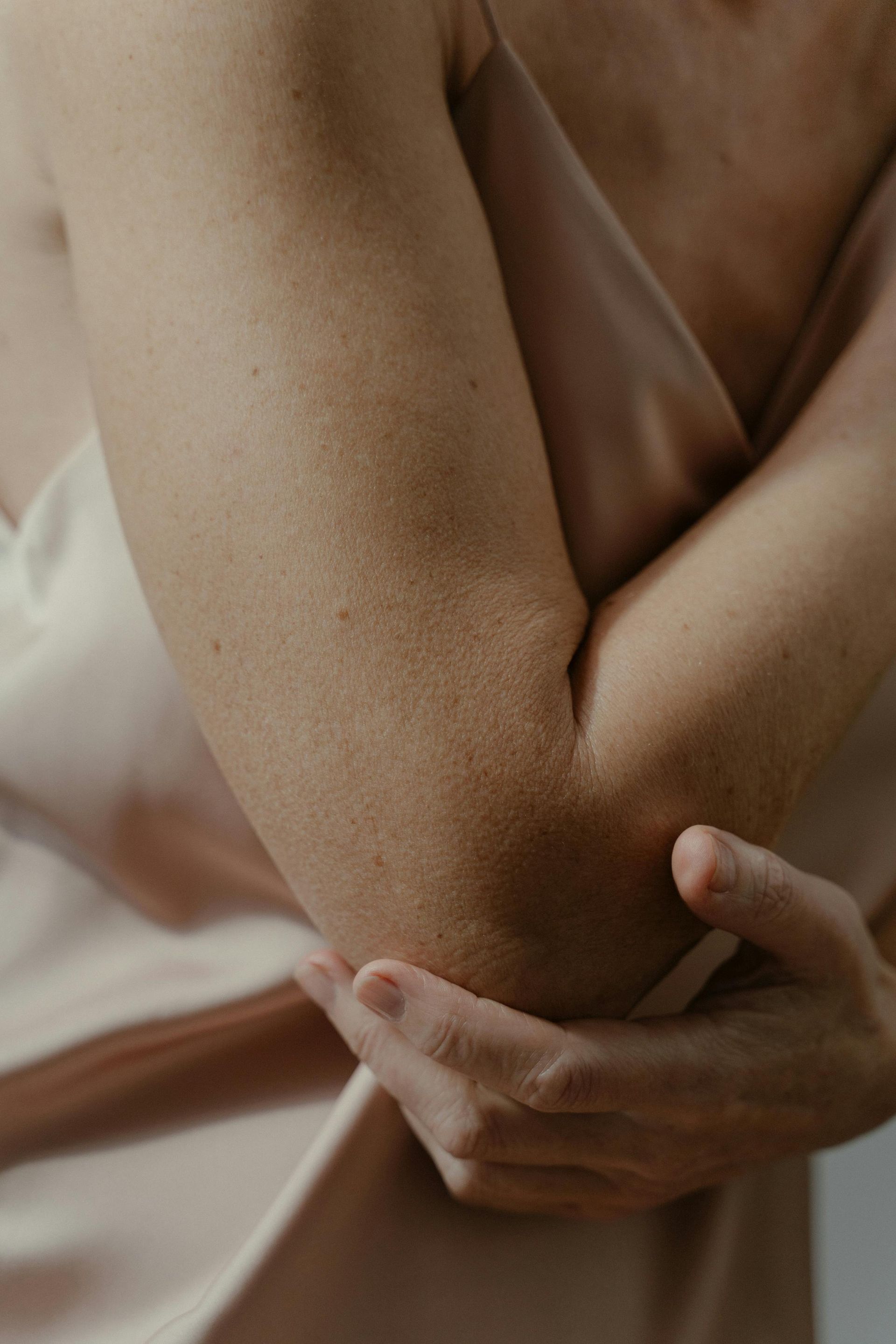
Golfer's elbow — known clinically as medial epicondylitis — is a problem with the tendons that attach your forearm muscles to the bony bump on the inner side of your elbow (the medial epicondyle). These are the muscles that bend your wrist and grip your fingers, so every time you clench or twist, they pull on that attachment point.
Despite the "-itis" ending, which implies inflammation, research over the last couple of decades has shown that long-standing cases are usually less about active inflammation and more about tendon degeneration: small-scale wear in the tendon fibres that the body has struggled to repair properly. That distinction matters, because it helps explain why simply resting or waiting often isn't enough — the tissue needs a reason to start healing again, not just a break from use.
How it typically feels
Pain and tenderness on the inner side of the elbow (as opposed to tennis elbow, which affects the outer side) Discomfort that spreads down the inner forearm towards the wrist
A weaker, more painful grip — noticeable when carrying bags, opening jars, or shaking hands
Symptoms that worsen with wrist bending, gripping, or twisting movements
Stiffness in the elbow, sometimes worse first thing in the morning
Who gets it, and why it lingers
Medial epicondylitis is less common than its outer-elbow cousin, tennis elbow, but it's far from rare. It's most often seen from around the age of 40 onward and is strongly linked to occupations and hobbies involving repetitive gripping, forceful wrist movements, or heavy manual work. Racket sports, weight training, throwing sports, and trades like carpentry and plumbing are all common culprits.
Part of what makes it persistent is anatomy: tendons have a relatively poor blood supply compared with muscle, so once the tissue starts to break down faster than it repairs, the natural healing response can stall. You end up in a frustrating loop — the elbow calms down with rest, then flares again as soon as you load it. This is exactly the kind of "chronic, not settling" tendon problem that shockwave therapy was developed to address.
What usually gets tried first
For many people, golfer's elbow is first managed with sensible, conservative measures: relative rest, adjusting the activities that aggravate it, ice, and a structured programme of loading exercises to gradually rebuild the tendon's tolerance. A well-designed exercise programme is genuinely important and remains a cornerstone of tendon rehab. Some people are also offered injections elsewhere — and if you're weighing that up, our separate article on how shockwave compares to injections goes into the trade-offs in detail.
These approaches help a lot of people. But a meaningful proportion of cases don't fully resolve, or keep recurring — and that's usually the point at which people come looking for something that targets the tendon itself.
How shockwave therapy works
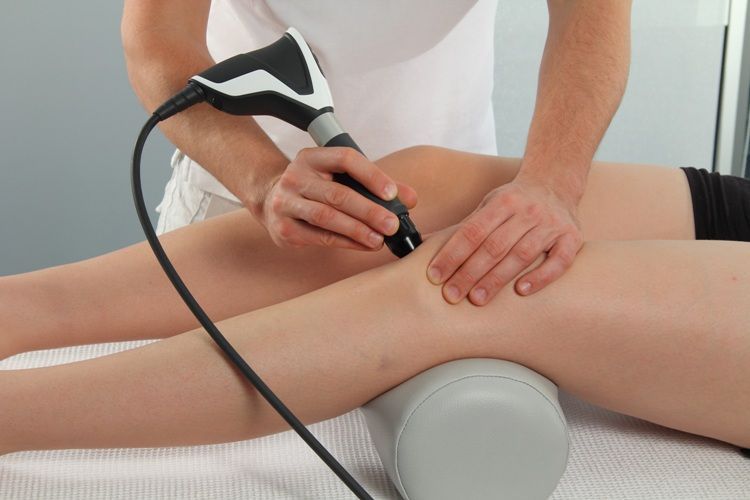
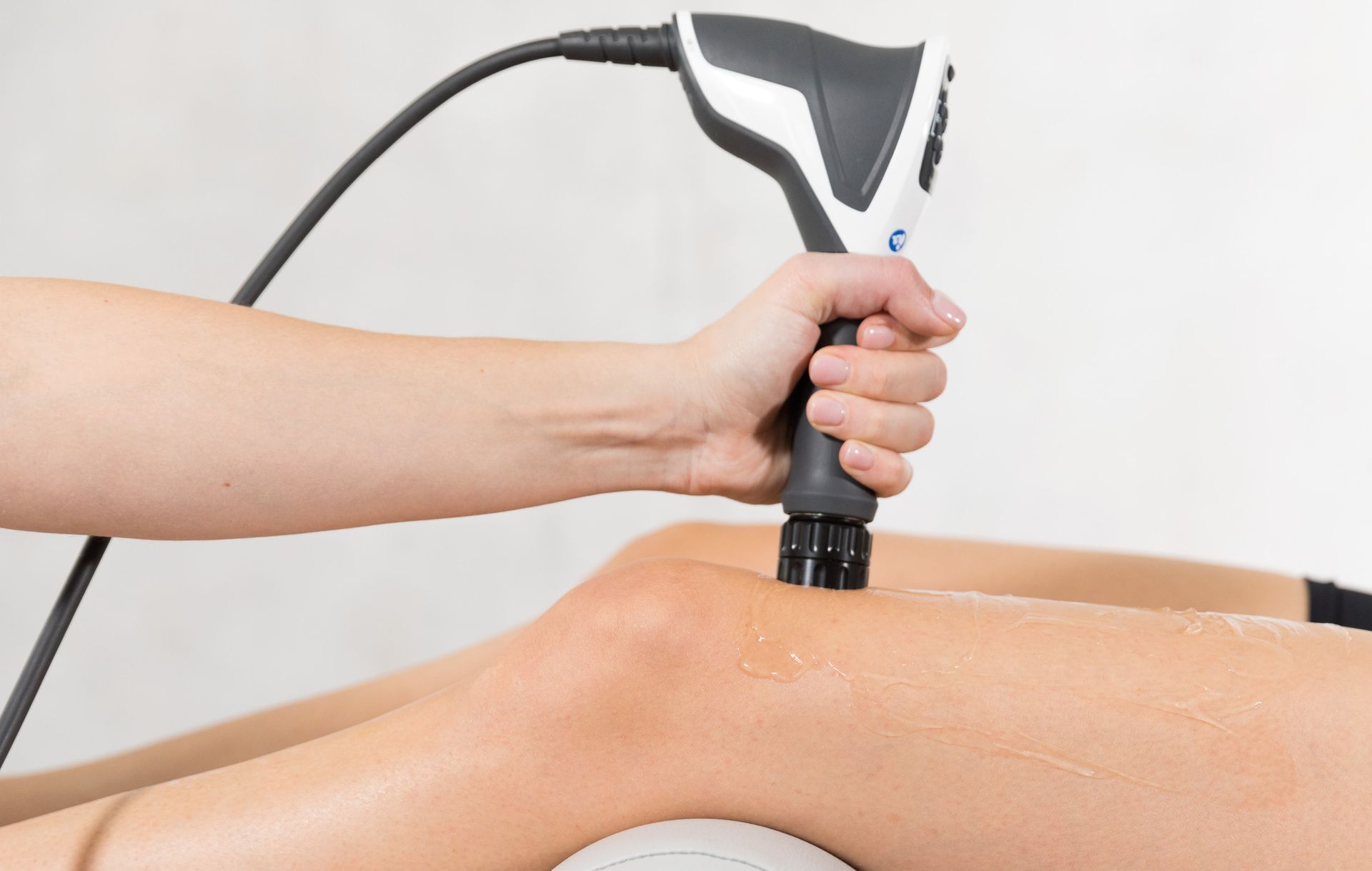
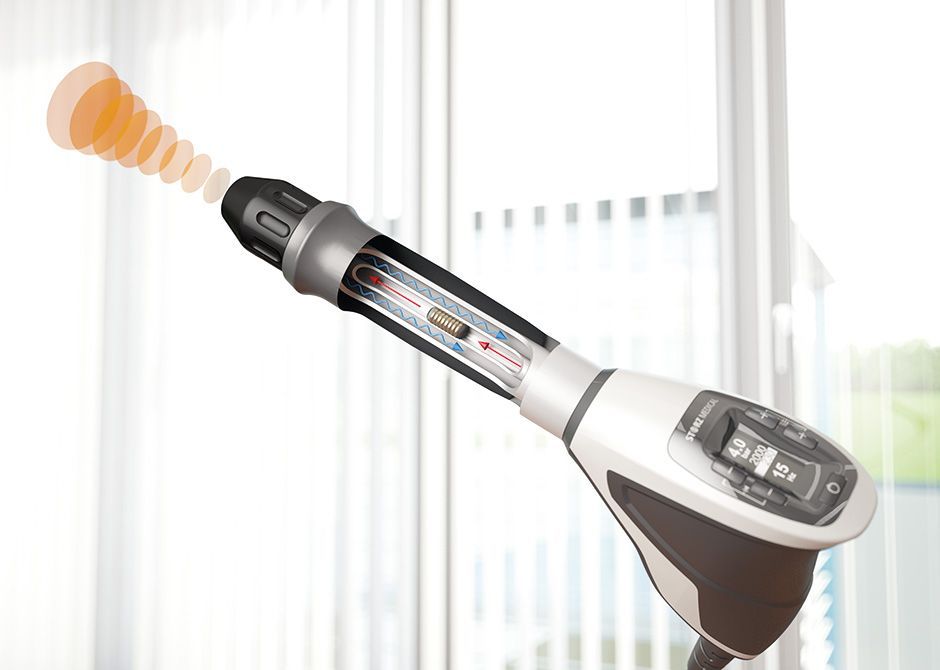
Shockwave therapy (extracorporeal shockwave therapy, or ESWT) is a non-invasive treatment that delivers a series of controlled acoustic pressure waves through the skin into the affected tendon. There are no needles and no medication involved — a handpiece is applied to the inner elbow and delivers the pulses during a short session.
The aim is to "wake up" a stalled healing response. The pressure waves are thought to work in several ways: encouraging the formation of tiny new blood vessels (improving blood flow to a poorly-supplied tendon), stimulating the cells that lay down new collagen, and influencing the way the area processes pain. In practical terms, the goal is to shift a stubborn, degenerative tendon back into an active repair state — something rest alone can struggle to do.
At our Hove clinic we use both radial and focused shockwave, which lets us tailor the depth and intensity of treatment to the individual tendon and how deep the problem sits.
What does the evidence say?
It's worth being straight about this. Shockwave therapy has a strong and well-established evidence base for several tendon conditions — tennis elbow, plantar fasciitis, and Achilles problems among them, several of which are supported by specific NICE guidance. For golfer's elbow specifically, the research base is genuinely encouraging but smaller than for those better-studied conditions.
Systematic reviews of shockwave therapy for upper-limb tendinopathies have included medial epicondylitis and reported it to be a safe, well- tolerated option with positive outcomes for pain and function in many cases. The overall picture is promising, though researchers rightly note that more high-quality trials focused solely on golfer's elbow would strengthen the evidence further. We think it's important you have that honest context — rather than a promise — when deciding whether it's worth trying. Outcomes vary from person to person, and shockwave works best as part of a plan that includes appropriate loading exercises, not as a stand-alone fix.
What to expect at our Hove clinic
Everything starts with a proper assessment. Inner-elbow pain isn't always a straightforward tendon problem — the ulnar nerve runs right behind the medial epicondyle, and irritation there can mimic or accompany golfer's elbow — so a careful examination to confirm what's actually driving your symptoms comes first. Where it's useful, we have on-site digital X-ray available.
A typical shockwave course runs over several weekly sessions, each usually lasting only around 10–15 minutes. Most people carry on with daily life between sessions, alongside a tailored exercise programme to build the tendon back up. Some tenderness during and shortly after treatment is normal and generally settles quickly. We're also recognised by Vitality and AXA, so it's worth checking your policy if you have private cover.
When inner-elbow pain needs a doctor first
Shockwave therapy is for persistent tendon-related pain that has been assessed. Please see your GP or an appropriate healthcare professional promptly — rather than assuming it's golfer's elbow — if you have:
Numbness, tingling or pins-and-needles in your ring and little fingers, or weakness in the hand — this can point to ulnar nerve involvement rather than a simple tendon problem
Elbow pain following a fall, direct blow, or injury, or any obvious deformity, significant swelling or bruising Pain with fever, feeling generally unwell, redness or heat over the joint
Severe pain, pain that wakes you at night, or symptoms that are rapidly getting worse
A locked elbow or a marked loss of movement
These features can indicate other conditions that need a different approach. When in doubt, get it checked.
Book a golfer's elbow assessment in Hove
If inner-elbow pain has been dragging on and rest hasn't fixed it, a proper assessment is the sensible first step. We'll examine the elbow, confirm what's causing your symptoms, and talk you through whether shockwave therapy is a suitable option for you.
Hove Shockwave — 82 Goldstone Villas, Hove, BN3 3RU Call 01273 324466 to book, or enquire online.
Frequently asked questions
Is golfer's elbow the same as tennis elbow?
They're closely related but affect opposite sides of the elbow. Golfer's elbow (medial epicondylitis) affects the tendons on the inner side and
tends to hurt with gripping and wrist bending. Tennis elbow (lateral epicondylitis) affects the outer side and typically hurts when straightening the wrist or fingers. Both are overuse tendon problems, and both can be treated with shockwave therapy.
How long does golfer's elbow take to heal?
It varies widely. Mild cases can settle in a few weeks with rest and the right exercises, while more stubborn, long-standing cases can persist for many months. Because tendons heal slowly and have a limited blood supply, patience and a consistent loading programme matter — and treatments like shockwave therapy aim to help a stalled case start healing again.
Does shockwave therapy hurt?
Most people find it uncomfortable rather than painful, describing a tapping or tender sensation over the elbow during treatment. Settings can be adjusted to keep it tolerable. Some mild soreness for a day or two afterward is normal and usually eases on its own.
How many shockwave sessions will I need for golfer's elbow?
A typical course is spread over several weekly sessions, though the exact number depends on how long you've had the problem and how you respond. Your practitioner will give you a clearer idea after assessing your elbow, and progress is reviewed as you go.
Can I keep exercising or playing sport with golfer's elbow?
Often you can keep moving, but it usually helps to modify or reduce the specific activities that provoke the pain while the tendon recovers. Complete rest isn't always the answer either — controlled loading is part of getting a tendon healthy. The best plan depends on your case, which is something we'll work out together at your assessment.
What happens if golfer's elbow is left untreated?
Some milder cases do settle on their own. But left unaddressed, a stubborn case can become more entrenched, with ongoing pain, a weaker grip, and a tendency to flare whenever you load the elbow. Getting it assessed sooner rather than later gives you the best chance of a straightforward recovery.
This article is for general information only and is not a substitute for individual medical advice, diagnosis or treatment. Outcomes vary from person to person, and no specific result is implied or guaranteed. If you're concerned about elbow pain or any of the symptoms described above, please consult a suitably qualified healthcare professional. Dr Lewis Kingsnorth is registered with the General Chiropractic Council (Reg. 3359).
