Hove Shockwave Blog




Peroneal Tendinitis (Peroneal Tendinopathy): Shockwave Therapy for Outer Ankle Pain in Hove
By Dr Lewis Kingsnorth DC MChiro, Chiropractor (GCC Reg. 3359) · Hove Shockwave, 82 Goldstone Villas, Hove BN3 3RU · Last reviewed: 7 October 2026 · 10-minute read
What is peroneal tendinitis?
Your peroneal tendons (also called the fibularis tendons) connect two muscles on the outside of your lower leg, peroneus longus and peroneus brevis, to your foot. Both tendons curve around the back of the lateral malleolus, the bony bump on the outside of your ankle. Peroneus brevis attaches to the base of the fifth metatarsal on the outer edge of your foot, while peroneus longus travels underneath the foot towards the base of the big toe.
Together they turn the sole of your foot outwards, steady your ankle on uneven ground and help support the arch as you push off. Because they work every time you land and balance, they can become painful when the load placed on them outpaces their ability to adapt.
H3 Tendinitis or tendinopathy: does the name matter?
“Tendinitis” suggests inflammation. In longer-standing cases, research suggests the main changes are in the tendon’s structure and its tolerance to load, rather than ongoing inflammation. That is why clinicians increasingly use the term peroneal tendinopathy. You will see both terms in this article; they describe the same problem, and the distinction matters mainly because it shapes treatment towards rebuilding the tendon’s capacity rather than simply resting it.
H2 Symptoms of peroneal tendinitis Common signs include:
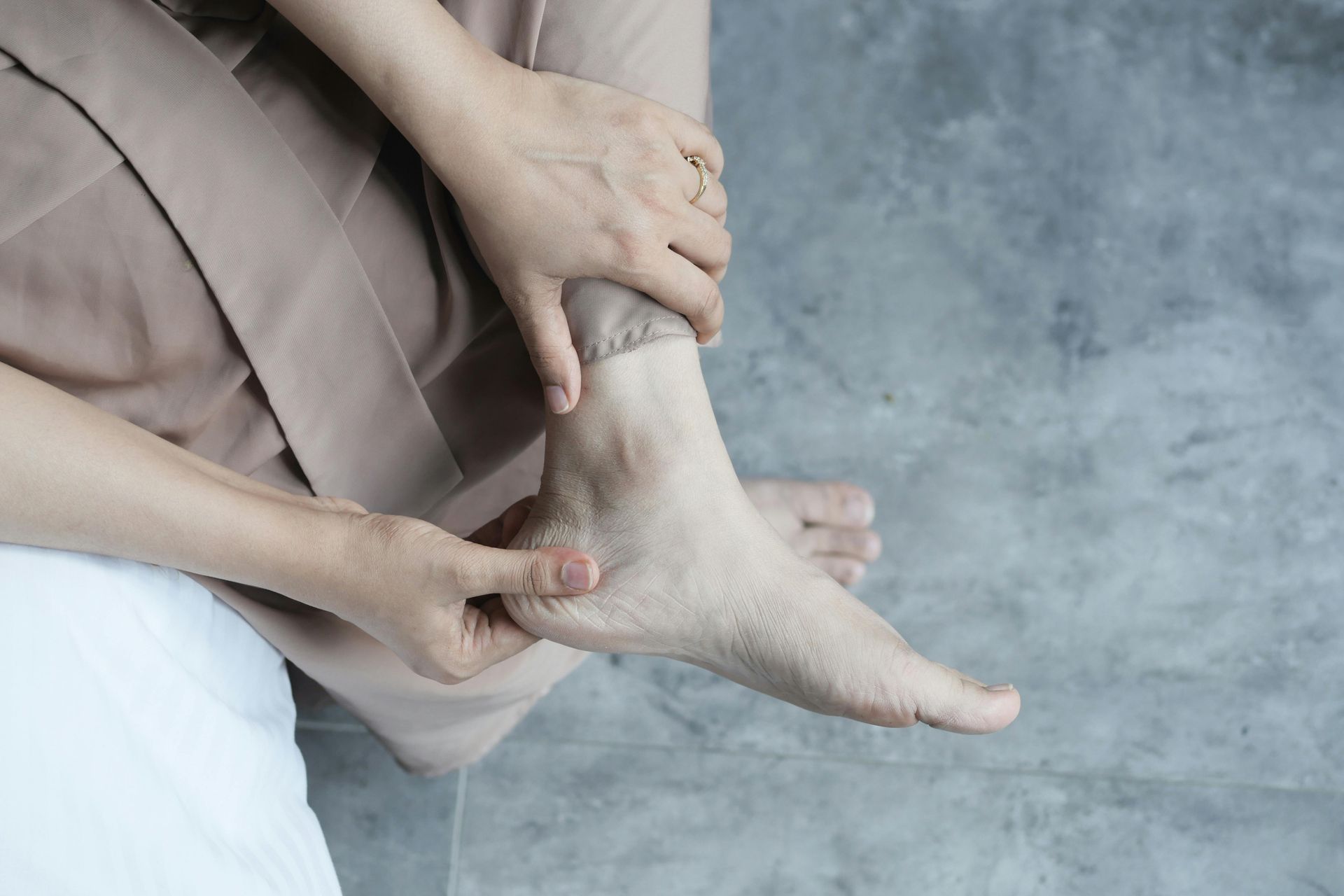
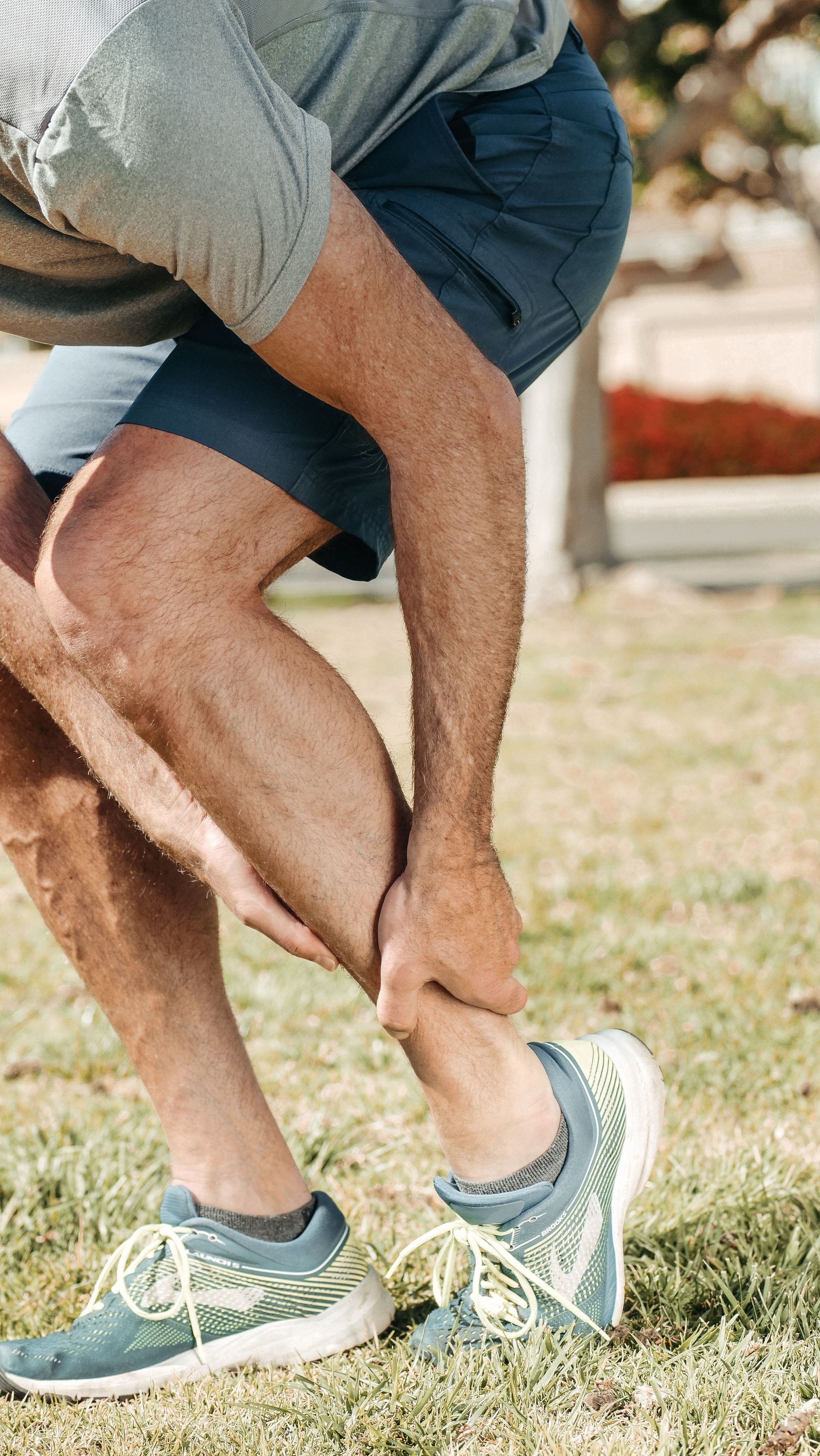
- Pain behind or just below the outer ankle bone, sometimes spreading along the outer edge of the foot
- Pain that builds during walking or running and may linger afterwards
- Stiffness or soreness first thing in the morning or after sitting
- Swelling or tenderness along the line of the tendons
- Discomfort on uneven ground, slopes or cambered roads
- A feeling that the ankle is weak or less stable than usual
- A clicking or snapping sensation behind the ankle bone can suggest the tendons are slipping out of their groove (subluxation), and sudden weakness after a twist can point to a tear. Both need proper assessment rather than self-management.
Hove Shockwave · Peroneal Tendinitis · Editor handoff
Page 2
H2 What causes peroneal tendinitis, and who gets it?
Peroneal tendinopathy usually develops gradually, when the tendons are asked to do more than they are
conditioned for. Common contributing factors include:
- A sudden increase in running distance, hill work or trail running
- Repeated running on cambered roads or uneven terrain
- Previous ankle sprains that have left the ankle less stable, so the peroneal muscles work harder to compensate
- A high-arched foot or a heel that tilts inwards, both of which can increase strain on the outer ankle
- Sports involving cutting, jumping and quick changes of direction, such as football, netball, tennis and dance
- Trainers worn down on the outside edge, or new footwear introduced too quickly
- Locally, that might be a seafront runner who has added hill sessions, a walker tackling the South Downs Way, or a five-a-side player who has rolled the same ankle a few times over the years.
- H2 How we assess outer ankle pain at our Hove clinic
Pain on the outside of the ankle has several possible causes, so the first step is confirming whether the - peroneal tendons are actually the problem. Your assessment includes:
- A detailed history of your symptoms, activity levels and any previous ankle injuries
- Examination of the ankle and foot, including tenderness along the tendons and how strong and comfortable it is to turn your foot outwards against resistance
- Balance and single-leg control, plus a look at how you walk and, where relevant, run
- A check of your usual footwear
- Conditions that can mimic peroneal tendinopathy include a lateral ankle ligament injury, sinus tarsi pain, a stress fracture of the fibula or fifth metatarsal, and irritation of the nerves around the outer ankle. Where a bony cause needs ruling out, we have digital X-ray on site, although X-ray cannot always show an early stress fracture. X-ray does not show tendons, so if we suspect a tear or a tendon slipping out of position, we will advise referral for an ultrasound or MRI scan before considering shockwave.
- H2 Treatment options for peroneal tendinitis
Most people improve without needing anything advanced. A good plan usually combines: - Load management: reducing, rather than necessarily stopping, the activities that flare it, such as fewer hills, flatter routes and shorter runs, while keeping you active.
- Progressive strengthening: tendons respond to load. A structured programme typically builds from resisted outward turning of the foot with a band, to calf raises and, eventually, sport-specific drills.
- Balance and ankle control: especially important if you have had previous sprains.
- Footwear and support: supportive, well-fitting shoes; short-term taping or bracing; and insoles where foot
- shape is a contributing factor.
- Hands-on care: some people find treatment of the surrounding joints and soft tissues helpful alongside their exercises.
- If symptoms persist despite a few months of well-structured rehab, that is usually the point at which shockwave therapy is worth discussing.
Hove Shockwave · Peroneal Tendinitis · Editor handoff
Page 3
H2 How shockwave therapy may help peroneal tendinopathy
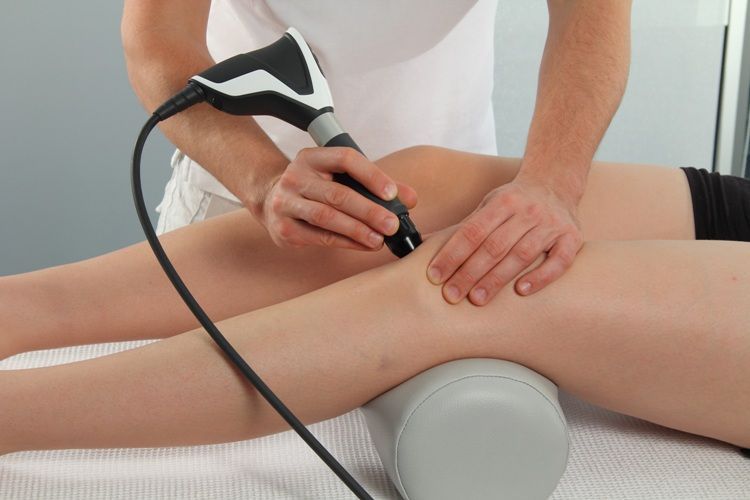
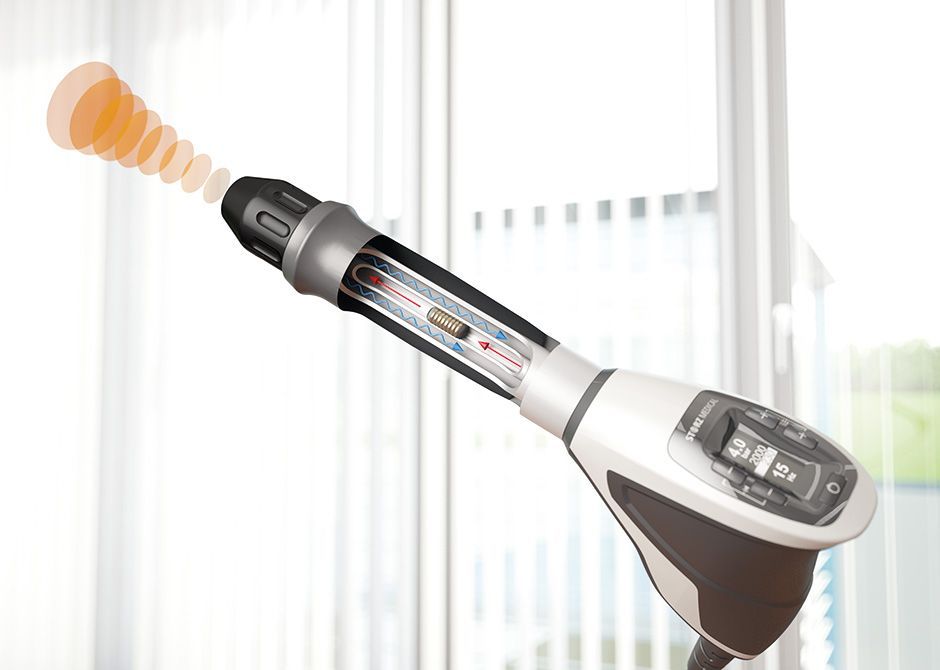
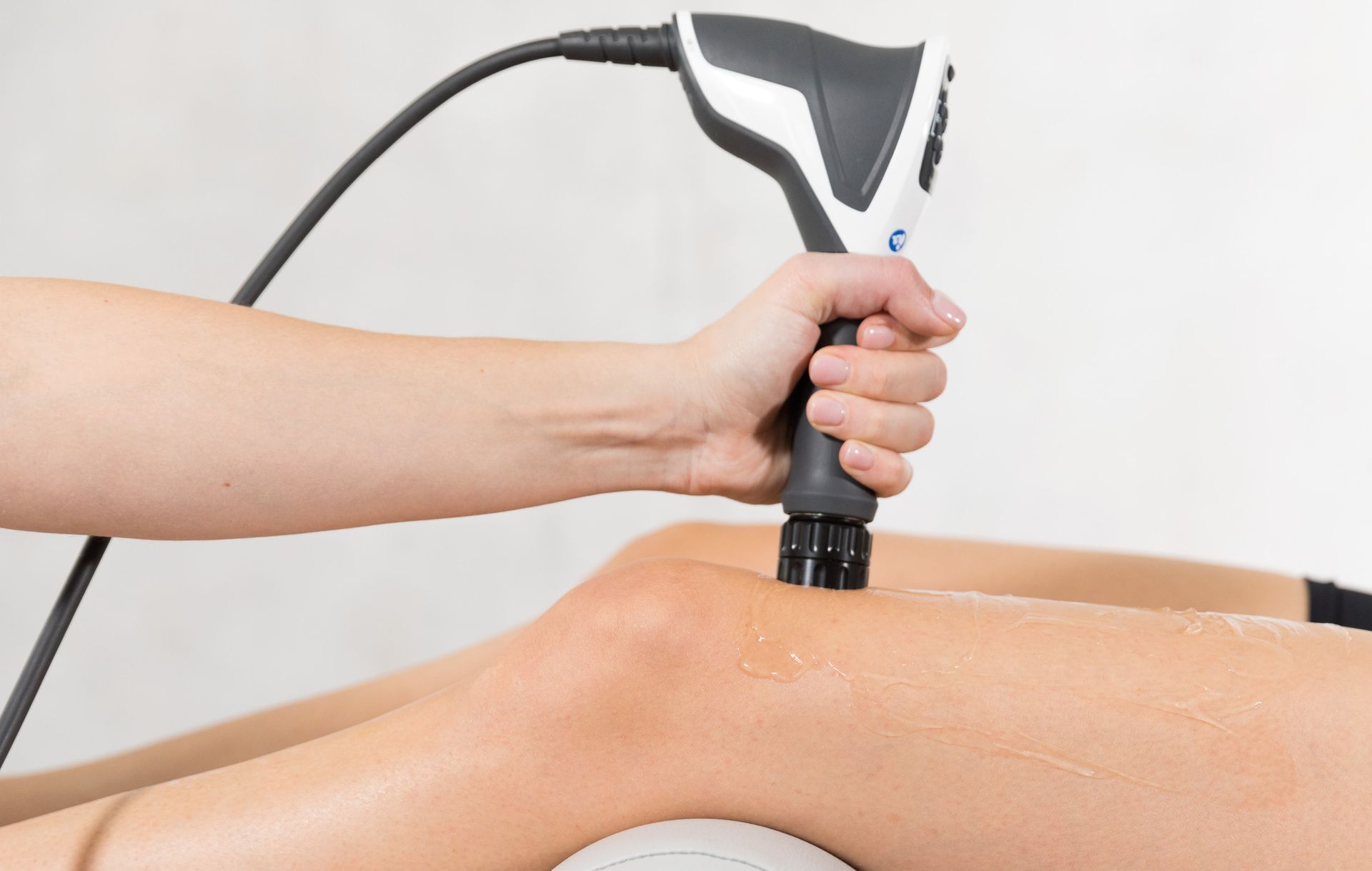
Shockwave therapy, or extracorporeal shockwave therapy (ESWT), delivers pulses of acoustic energy through the skin into the painful tendon. It is thought to stimulate the tissue’s own repair processes and reduce pain sensitivity, although the exact mechanism is not fully understood. It is non-invasive: there are no needles or incisions.
At Hove Shockwave we offer both main types:
- Radial shockwave spreads energy over a broader, more superficial area. It is often suited to the peroneal tendons where they run close to the surface behind the ankle bone.
- Focused shockwave concentrates energy at a set depth, which may be useful where tenderness sits closer to the tendon attachment on the outer edge of the foot.
- For some patients we may also discuss EMTT (Extracorporeal Magnetotransduction Therapy), delivered with the STORZ MEDICAL Magnetolith. EMTT is a newer technology and evidence for its use in tendon problems is still emerging, so we only suggest it where we think it is reasonable and we explain the uncertainty.
- Shockwave is used alongside rehab, not instead of it. The aim is to help settle a stubborn, sensitive tendon so you can keep progressing the exercises that build its long-term capacity.
- H3 What does the research say?
- You deserve a straight answer here. Shockwave therapy has been studied far more in other lower-limb tendon problems, such as Achilles tendinopathy and plantar fasciitis, where systematic reviews have reported improvements in pain and function. Research looking specifically at the peroneal tendons is very limited, and no high-quality trials have focused on this condition alone. Our approach to peroneal tendinopathy is therefore based on evidence from related tendon conditions, careful assessment and close monitoring of your progress.
- NICE has not issued guidance on shockwave therapy for peroneal tendinopathy. Its guidance on shockwave for Achilles tendinopathy (HTG426) found no major safety concerns, but noted that evidence on how well it works is limited, and asks clinicians to make sure patients understand that uncertainty. That is exactly the conversation we have with you before any treatment.
- H2 What to expect from a course of shockwave therapy
- Assessment first: we confirm the diagnosis and check that shockwave is suitable for you before any
- treatment.
- Sessions: each appointment is typically 15 to 20 minutes, with the shockwave itself applied for a few minutes.
- Course length: courses typically involve three to six sessions, about a week apart, although this varies.
- How it feels: a tapping or pulsing sensation that can be uncomfortable over sensitive spots. We adjust the
- intensity to keep it tolerable.
- Afterwards: temporary soreness, redness or mild swelling for a day or two is common. Most people carry on with normal daily activities, but we usually advise avoiding running, jumping and other high-impact activity for around 48 hours after each session.
- Progress reviews: responses vary. Some people notice a change within a few weeks; for others, improvement builds gradually after the course ends, and some people do not respond. If you are not progressing, we will tell you honestly and discuss other options, including referral.
Hove Shockwave · Peroneal Tendinitis · Editor handoff
Page 4
H2 Is shockwave therapy suitable for everyone?
No. We screen carefully at your assessment. Shockwave may not be appropriate if you:
- Are pregnant
- Have a bleeding or clotting disorder, or are having any treatment that affects blood clotting
- Have an infection, open wound or skin problem over the treatment area
- Have, or are being investigated for, cancer in or near the treatment area
- Have had an injection into the area recently
- Have a suspected tendon tear or tendon dislocation that has not yet been investigated
- Are under 18
- Have a pacemaker, or metal implants near the area (particularly relevant to EMTT)
- Have reduced sensation in your foot, for example from nerve damage
- H2 When to seek urgent medical advice
Outer ankle pain is not always a tendon problem. Seek prompt medical help through NHS 111, your GP, an - urgent treatment centre or A&E, as appropriate, if you:
- Cannot put weight on your foot after a fall, twist or impact, or have marked tenderness over the ankle or foot bones, as you may need an X-ray to rule out a fracture
- Felt a sudden pop or snap followed by weakness
- Have a hot, red, swollen ankle, especially if you have a fever or feel unwell
- Have calf pain, swelling or warmth in the lower leg, which can be a sign of a blood clot
- Notice numbness, pins and needles, or a change in the colour or temperature of your foot
- Have diabetes and notice new swelling, warmth or a change in the shape of your foot
- Have pain that is severe at night, constant, or accompanied by unexplained weight loss
- In an emergency, call 999.
- H2 Self-help while you wait for your appointment
- Ease off, but avoid stopping completely: keep moving within comfortable limits.
- Swap hills, trails and cambered roads for flat, even surfaces for now.
- Wear supportive shoes and check whether your trainers are worn down on the outside edge.
- Try gentle ankle movements and calf raises. Mild discomfort (around 3 out of 10) that settles by the next morning is generally fine; sharp or worsening pain is a sign to back off.
- A cold pack wrapped in a towel for 10 to 15 minutes may ease a flare-up. H2 Frequently asked questions
- H3 What is the fastest way to heal peroneal tendonitis?
There is no instant fix, but the most reliable approach combines easing off the activities that aggravate it with a progressive strengthening programme for the peroneal and calf muscles, plus attention to footwear and ankle stability. Complete rest tends to leave tendons weaker. For persistent cases that have not settled with rehab, shockwave therapy may help some people as part of a wider plan.
Hove Shockwave · Peroneal Tendinitis · Editor handoff Page 5
H3 How long does peroneal tendonitis take to heal?
It varies from person to person. Mild, recent cases often settle within a few weeks once the load on the tendon is managed. Longer-standing peroneal tendinopathy can take three to six months of consistent rehab, and occasionally longer. Early assessment helps rule out a tear and avoid setbacks.
H3 Can I keep walking or running with peroneal tendonitis?
Usually you can stay active, but you may need to adjust what you do. Walking is generally fine if pain stays mild and settles quickly afterwards. For running, temporarily reducing distance, speed and hills, and choosing flat routes, often lets you keep training. If pain increases during activity or is worse the next morning, scale back further and get it assessed.
H3 Does shockwave therapy work for peroneal tendonitis?
Shockwave therapy has a growing research base in lower-limb tendon problems such as Achilles tendinopathy and plantar fasciitis, but very little research has looked at the peroneal tendons specifically. It may help some people whose symptoms have not improved with rehab, and it is used alongside exercise rather than instead of it. It does not work for everyone, and we will discuss realistic expectations at your assessment.
H3 What can be mistaken for peroneal tendonitis?
Several conditions cause pain on the outside of the ankle, including a lateral ankle ligament sprain, sinus tarsi
syndrome, a stress fracture of the fibula or fifth metatarsal, cuboid problems and nerve irritation. A peroneal tendon tear or a tendon slipping out of its groove can also look similar. That is why a thorough assessment always comes before treatment.
H3 Is peroneal tendonitis serious?
It is not usually serious, and many cases respond well to conservative care. However, continuing to overload a painful tendon may increase the risk of tendon damage, such as a split tear, which can take longer to recover from and occasionally needs a surgical opinion. Get it checked if pain lasts more than a few weeks, keeps coming back, or comes with weakness or a feeling of instability.
H2 Book a peroneal tendinitis assessment in Hove
If outer ankle pain is stopping you running, walking or playing sport, book an assessment at Hove Shockwave. Every course of shockwave starts with a thorough assessment, and we will always tell you honestly whether we think it is the right option for you.
We are at 82 Goldstone Villas, Hove BN3 3RU, a short walk from Hove station, and see patients from across Brighton & Hove, Portslade, Shoreham-by-Sea and surrounding areas. We are recognised by some health insurers, including Vitality and AXA; please check your policy for cover before booking.
Call 01273 324466 or book online.
H3 Related reading
- Shockwave therapy for Achilles tendinopathy
- Shockwave therapy for plantar fasciitis
- Haglund’s deformity and focused shockwave therapy
- EMTT (Extracorporeal Magnetotransduction Therapy) in Hove
Hove Shockwave · Peroneal Tendinitis · Editor handoff
Page 6
About the author
Dr Lewis Kingsnorth DC MChiro is a chiropractor registered with the General Chiropractic Council (GCC Reg. 3359) and a member of the United Chiropractic Association. He holds a Master of Chiropractic (MChiro) from the Welsh Institute of Chiropractic, has been qualified since 2009, and founded Chiropractic First in Hove, which has served the local community since 2006.
Disclaimer: This article is for general information only and is not a substitute for an individual assessment or medical advice. Shockwave therapy is not suitable for everyone, and results vary between individuals. If you are worried about your symptoms, speak to your GP or another qualified healthcare professional.
